The Connection Between Outdoor Living and Mindful Observation
When was the last time you stepped outside and felt the moment instead of thinking about your to-do list? If you’re like most people, it’s probably been a while.
The truth is, most of us spend our days rushing between tasks, barely noticing the world around us. But here’s something interesting: spending just a few minutes practising mindfulness outdoors can change your mental state.
This isn’t just feel-good advice. After years of photographing the night sky across Brisbane and studying astrophysics, I’ve learned that nature has this incredible way of pulling you back to the present.
In this article, we’ll explore how outdoor living connects with mindful observation, why it works so well for stress relief, and simple ways to start tonight.
I know you’re here because something about this topic resonates with you. So, let’s discover what happens when you slow down under the stars.
What Is Mindfulness Outdoors?
Mindfulness outdoors is the practice of being fully present in natural settings while observing your surroundings without judgment. But what does that look like in practice?
Think of it like this: you’re sitting in a park, and instead of scrolling through your phone or planning dinner, you’re actually there. You notice the wind brushing your skin, hear birds chatting in the trees, and feel the ground beneath you. It combines awareness of your breath, body sensations, and all those natural elements happening around you right now.
Research from Brown University shows outdoor mindfulness reduces stress hormones more effectively than indoor meditation or traditional relaxation techniques. The reason this works so well is that nature doesn’t ask anything from you. It just lets you be present, and that’s where the real benefits kick in.
Why Does Spending Time Outdoors Boost Your Mental Health?
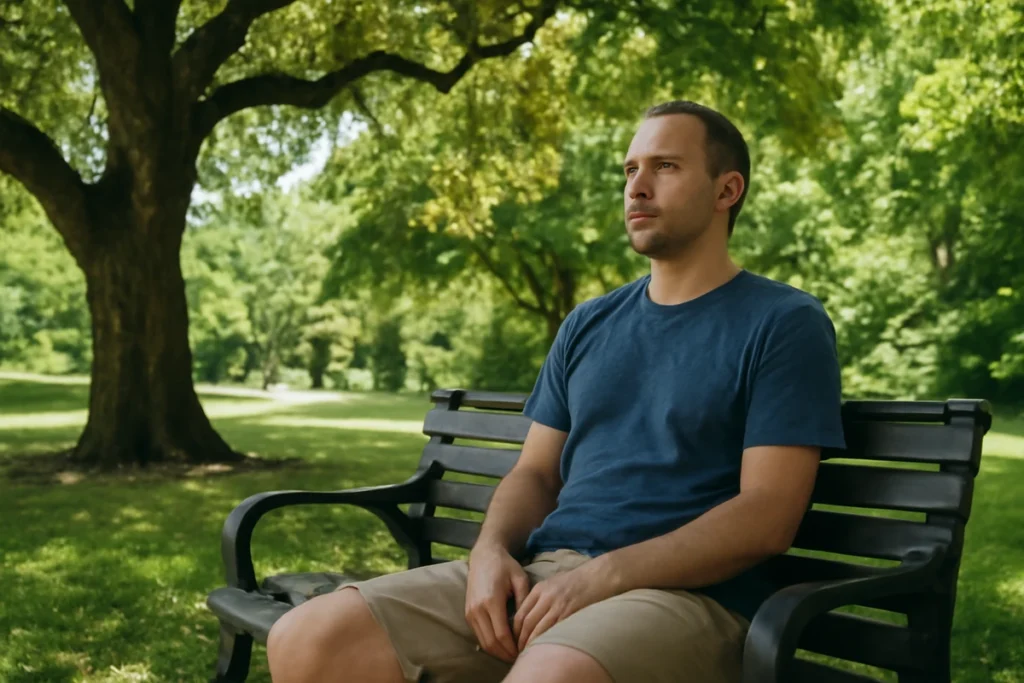
Spending time outdoors improves mental health by lowering stress hormones, boosting mood, and creating space for your mind to reset naturally. Believe it or not, science backs this up in surprising ways.
In this section, I’ll walk you through what researchers have discovered about nature and your well-being.
New Research on Nature and Wellbeing
New research shows that 20 minutes in nature lowers cortisol levels significantly, improving mood and reducing anxiety symptoms. Japanese studies on forest bathing demonstrate how outdoor exposure strengthens immune function and promotes better sleep quality.
What makes this even more interesting is that Australian research confirms green spaces near homes correlate with lower depression rates. You don’t need to spend an arm and a leg on fancy equipment to experience these benefits.
The Physical Benefits You Didn’t Expect
Outdoor mindfulness improves balance, flexibility, and core strength through gentle movements like walking or stretching. Here’s how:
- Better Sleep: Natural sunlight regulates circadian rhythms, helping you fall asleep faster and wake feeling more refreshed.
- Improved Focus: When you combine a simple walk in nature with focused breathing, you improve focus while getting exercise.
- Energy Boost: Fresh air increases oxygen intake, boosting energy levels and improving concentration throughout your day.
How It Calms Your Nervous System
Natural environments activate your parasympathetic nervous system, triggering relaxation responses that counteract daily stress. So that instant sense of calm you feel in nature is real.
Also, unpredictable outdoor sounds create varied stimuli that keep your mind engaged without overwhelming your senses. Grounding techniques outdoors, like feeling grass or soil, provide an immediate physical connection that settles racing thoughts and brings you back to peace.
These are the mental and physical perks. Now, let’s see what you can actually do outside to tap into all this.
Mindfulness Activities That Work Best Outdoors
So what’s the real deal with outdoor mindfulness activities? These are simple practices you can start today in the great outdoors, no special training required.
- Walking Meditation: Walking meditation lets you focus on each footstep. You notice how your weight shifts and muscles engage naturally. It might not be everyone’s cup of tea at first, but give it a go.
- Sensory Observation: The process involves identifying five things you see, four you hear, three you touch, and two you smell. This exercise pulls your awareness into the present moment instantly.
- Breathing Exercises: Pair your breath with natural rhythms like waves or wind to create deeper awareness of your body. When you sync your breath with nature, your stress melts away, and your mind stops racing.
- Night Watching: Stargazing combines visual focus with patience, training your mind to slow down and observe without rushing. You’re catching sight of objects millions of kilometres away while your thoughts settle.
- Garden Work: The practice of working with soil connects you to the natural world in ways that feel surprisingly meditative. It’s because mindful gardening engages touch, smell, and sight while completing satisfying tasks that ground you in present moments.
Night Sky Observation: A Gateway to Mindfulness
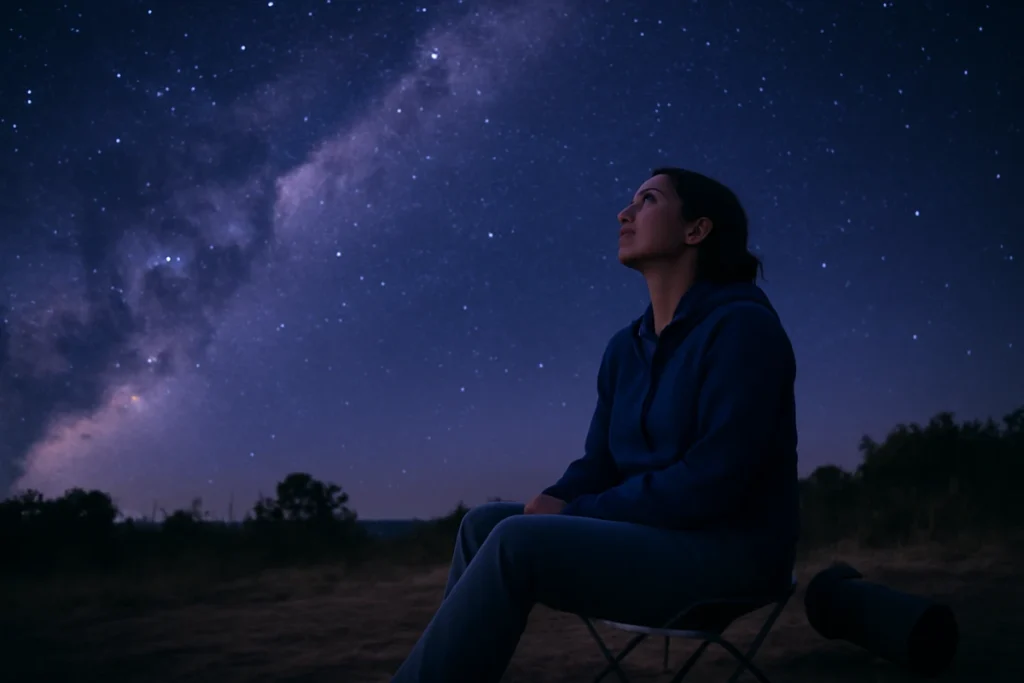
The best thing about stargazing is that it naturally forces your mind to slow down and focus. And that’s where things get interesting.
The night sky naturally slows your thinking because celestial objects move slowly, which encourages patient observation and reflection. When you watch the stars, you’re present in the moment, letting wonder take over.
What’s more, astronomy requires you to sit still in darkness and eliminate visual distractions. The practice pulls you away from screens, notifications, and endless to-do lists.
Through countless nights observing meteor showers and tracking constellations across Brisbane’s skies, I’ve learned that space rocks and planetary movements give unpredictable moments. They teach acceptance of natural timing and rhythms you can’t control.
How Does Astronomy Connect to Mindful Living?
Astronomy connects to mindful living by teaching patience, perspective, and present-moment awareness through observing celestial rhythms and patterns. Once you start paying attention to what’s happening above you, life on Earth feels different.
Here’s how it works in practice.
Stargazing as Active Meditation
Tracking constellations keeps your mind focused on one task (pretty similar to following your breath during meditation). The vastness of space naturally puts daily problems in perspective, reducing anxiety about minor concerns.
When you realise you’re looking at stars that might not even exist anymore, your work deadline suddenly feels less world-ending.
In my experience, learning star patterns builds patience as the skill develops gradually through consistent practice over months. This sense of slow progress mirrors the concept of mindful living perfectly.
The Rhythm of Celestial Events
Moon phases create natural checkpoints for reflection, offering monthly cycles that mirror personal growth patterns. As seasons shift, the changing constellations teach acceptance of natural transitions, helping you embrace change in daily life.
The reason this matters is that the planets move through the sky on their own schedule, reminding you that some things unfold in their own time.
Quick Tip: Resources like Telescope Magazine can help you track upcoming meteor showers and planetary alignments, so you never miss these moments.
Setting Up Your Outdoor Space for Mindful Moments
Now that you understand the connection between astronomy and mindfulness, let’s look at creating your own observation spot.
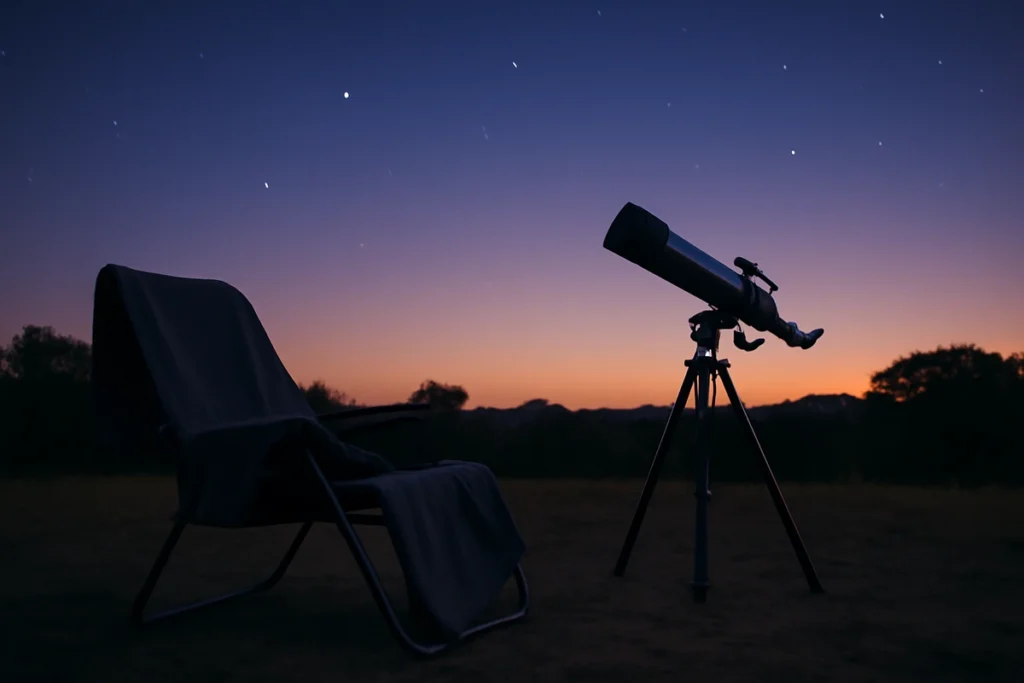
Start by choosing a spot with minimal light pollution where you can see stars clearly on most nights. Dark skies reveal more stars, sharper constellations, and faint objects like nebulae that the bright city glow simply washes out. If you live in a bright city, even finding a park twenty minutes away helps.
Once you’ve found your spot, add comfortable seating like a reclining chair or blanket that supports extended observation without physical discomfort. You’ll want to stay out there longer than you think, so comfort matters.
Mindfulness Tip: Keep distractions away by leaving phones inside or using aeroplane mode to prevent interruptions during practice (notifications kill mindfulness faster than anything else).
While a basic telescope helps you see more detail, your eyes alone can spot plenty of stars and planets. The atmosphere looks clearest on cool, dry nights when humidity doesn’t blur your view.
Creating the right space sets you up for consistent practice under the night sky.
Common Barriers and How to Overcome Them
Does the weather or city lights keep stopping you from getting outside at night? I know it’s frustrating when you’re ready to stargaze, but conditions won’t cooperate.
However, you can work around most of these obstacles with simple adjustments. Follow these strategies to keep your outdoor mindfulness practice consistent:
- Weather Changes: Check forecasts and have backup indoor activities for extremely cold nights. If rain’s coming, shift your session to the next clear evening instead of skipping it entirely.
- Light Pollution: Since your eyes need darkness to adjust and see fainter stars in the sky, try driving just a few minutes to a nearby park. This simple change reveals sky objects your backyard view can’t show you.
- Time Pressure: While life gets busy, try dedicating ten minutes once a week to start. You don’t need hours here and there. Consistency beats duration.
The benefits of reduced stress and improved mindfulness are worth pushing through these initial barriers. And who knows, you might become that neighbour everyone envies for having the calmest evenings.
Make Tonight Your First Step
Mindfulness in the outdoors doesn’t require fancy gear or perfect conditions. The connection between spending time in nature and mental health is real, research-backed, and available to anyone willing to step outside. Your mind needs these moments under the night sky more than you realise.
I’ve explored how outdoor living connects with mindful observation, why it boosts mental health, specific activities you can try, and how astronomy deepens the practice. I’ve also covered setting up your space and overcoming common barriers that might hold you back.
Don’t wait for the perfect moment to discover this for yourself.
Head outside tonight, find a comfortable spot under the sky, and let the stars guide you into a calmer, more mindful life. The natural world is waiting, and your practice starts now.
Explore more ways to connect with the night sky and outdoor mindfulness on Star Hawks Blog.