Planning a Stargazing Night in the Australian Outdoors
Ever stared up on a clear night and thought, “I wish I knew what I was looking at”? Well, you’re not alone. Most Aussies never even try stargazing because it seems too complicated with all the telescopes, strange constellation names, and confusing apps.
Little did they know that your eyes alone can spot thousands of stars, several planets, and even our home galaxy stretching overhead. In fact, it’s possible to see around 9,096 stars with the naked eye from a dark location. But most city dwellers see fewer than a dozen stars because of light pollution.
This guide walks you through picking the right night based on moon phases and weather. You’ll also learn about finding locations with minimal light pollution across Australia and packing the essentials for your stargazing trip.
Let’s get you watching the southern sky from your first dark site.
What Makes a Perfect Stargazing Night in Australia?
A perfect stargazing night needs three things: dark skies away from city lights, a moonless night, and clear weather conditions. Get these right, and you’ll see thousands more stars than you ever thought possible.
Here’s how you can find unforgettable views while stargazing.
Finding True Darkness Away From City Lights
Light pollution from cities washes out faint stars completely. You need at least 50 kilometres of distance to get proper darkness where the Milky Way becomes visible.
Generally, national parks and rural areas provide the darkest conditions. In that true darkness, you’ll spot the Milky Way, along with individual star clouds and dark dust lanes running through it.
Note that your eyes need 20 to 30 minutes in complete darkness to reach maximum sensitivity. Also, don’t check your phone during this time because even a quick glance resets the whole process.
Moon Phases Change What You’ll See With the Naked Eye
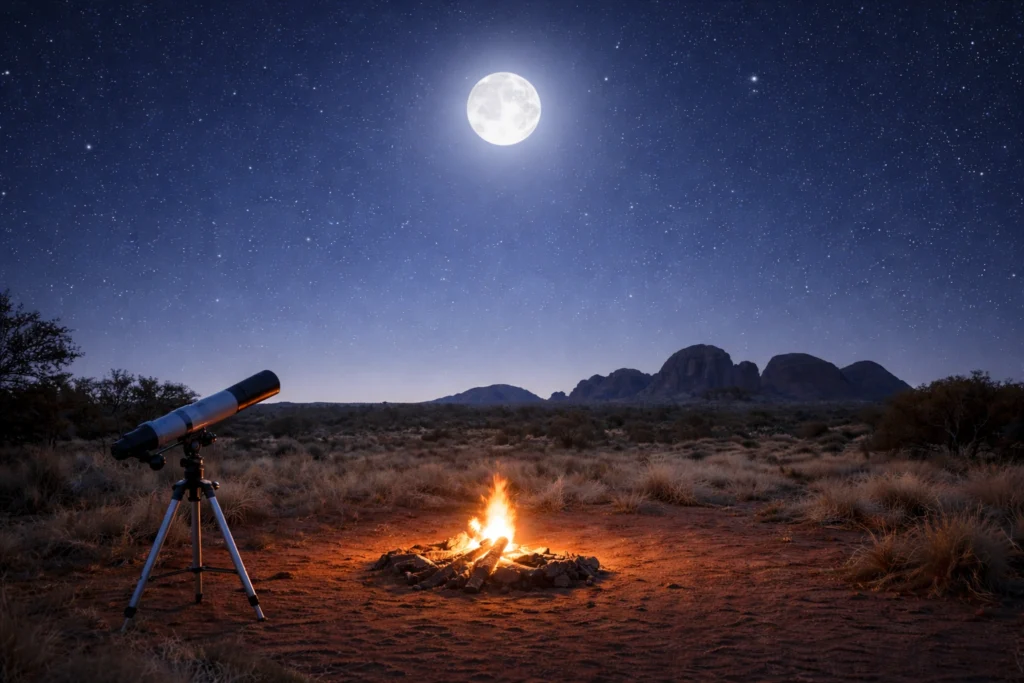
A full moon brightens the sky so much that it hides most stars and constellations. The moon acts like a natural streetlight that fades out everything except the brightest objects. In contrast, new moon nights or the week before and after give you the darkest skies for spotting the Milky Way.
Speaking from our stargazing experience during a new moon week, we could count over 2,000 stars with our naked eyes at Warrumbungle National Park. But the same location during a full moon revealed only about 300 stars.
Reading Weather Patterns for Clear Night Skies
Cloud cover ruins stargazing completely. So check forecasts for zero cloud coverage several hours before heading out.
Winter months in Australia typically offer clearer skies and less humidity than summer. Especially, June through August provides the most reliable clear nights across southern Australia. The cold air holds less moisture, which creates sharper views and more visible stars.
Note: Coastal areas often get marine layer clouds at night, while inland locations stay clearer year-round.
Stargazing Gear: Everything You Need For Your Trip
Beginners think stargazing requires a telescope to see anything worthwhile up there. But the truth is, most stargazers spend their first year using nothing but their naked eyes and maybe a pair of binoculars.
Below is a list of everything you’ll truly need as a beginner stargazer:
- Naked Eye Viewing: On average, we can see around 3,000 stars on a clear night without any equipment. That’s more than enough to spot constellations, planets, and the Milky Way stretching overhead.
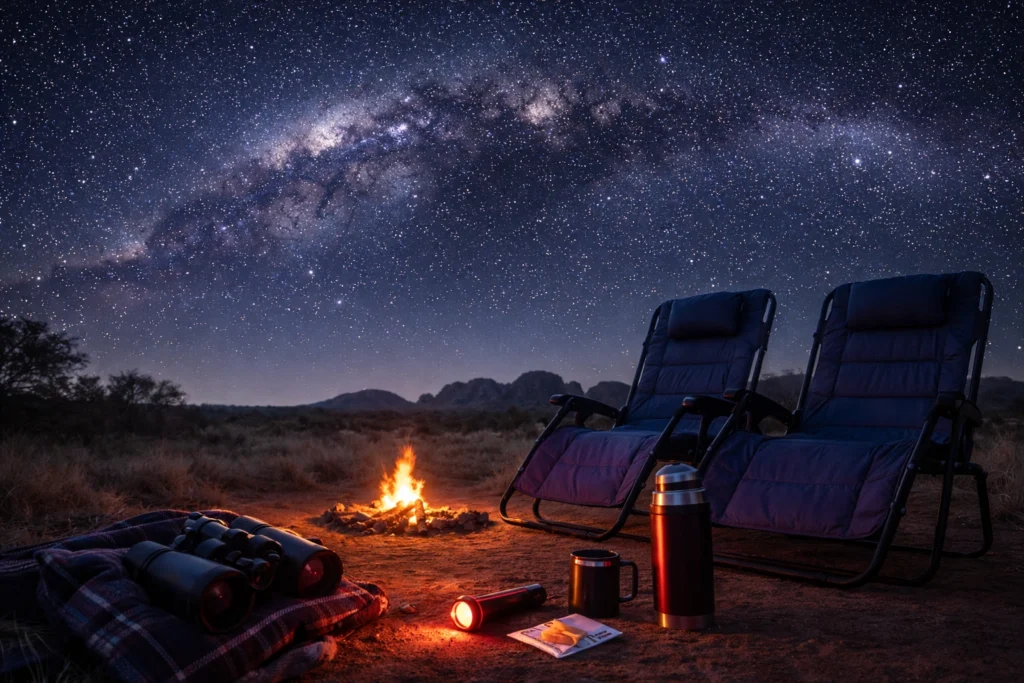
- Binoculars (7×50 or 10×50): A decent pair reveals Jupiter’s four largest moons lined up like tiny pearls beside the planet. The moon’s craters with sharp detail will show you the impact zones from billions of years ago.
- Star Chart Apps: SkyView Lite and Stellarium work offline and use your phone’s gyroscope to show what’s above you right now. You can point your phone at any star, and it identifies the object instantly if you download the star data before leaving.
- Red Flashlight: Unlike white light that resets your eyes completely, red light preserves your night vision while reading maps. That way, you won’t lose 30 minutes of adjustment every time you need to check something.
- Reclining Chairs or Blankets: Looking straight up for hours can cause serious neck strain. On the other hand, lying flat or using a reclining chair lets you watch meteors and track satellites comfortably across the sky.
As for telescopes, skip them until you’ve tried naked eye stargazing first (save yourself a few hundred dollars for now). Rather, start with your eyes and add gear only when you know what you want to see better. The universe doesn’t care how much you spend.
Best Places for Stargazing in Australia
Did you know that over 80% of the world’s population lives under light-polluted skies? Which means most Australians have never experienced a truly dark night. However, the good news is that Australia has some of the world’s darkest skies, and you don’t need to travel far to find them.
Here are some stargazing places that make overseas visitors jealous of us.
Warrumbungle National Park: Australia’s First Dark Sky Park
Warrumbungle National Park earned official Dark Sky Park status. Which means it has exceptionally low light pollution and protected darkness. This certification doesn’t come easy because the park has to prove near-zero artificial light interference.
The park sits in central New South Wales and offers designated stargazing spots with clear horizon views in all directions. Its viewing platforms face away from nearby towns and give you unobstructed 360-degree access to the sky.
Along with that, Siding Spring Observatory nearby has been studying the southern sky here since the 1960s (and for good reason).
Remote Outback Spots to See the Milky Way
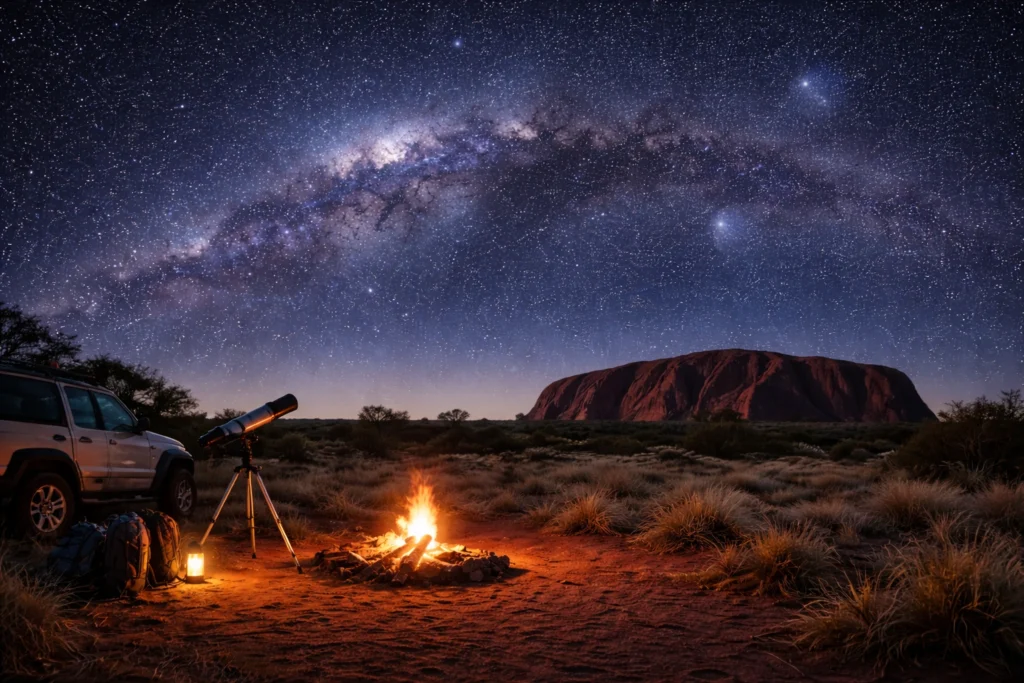
The Red Centre around Uluru provides pitch-black skies where you can see the Magellanic Clouds (small galaxies that look like faint smudges floating beside the Milky Way) with your naked eyes.
During our autumn trip to the Flinders Ranges in South Australia, stars appeared at different depths, with layers you never see from cities. This area combines stunning daytime landscapes with incredibly dark nights for double the adventure.
Apart from these, western Queensland’s outback towns have zero nearby light sources that reveal stars invisible from anywhere coastal.
National Parks Within Driving Distance
Blue Mountains National Park sits just90 minutes from Sydney and offers reasonable darkness at elevated lookout points. The elevation helps you rise above some of Sydney’s light domes.
Grampians National Park in Victoria also provides dark sky camping spots away from Melbourne’s glow. The Pinnacle lookout in the Grampians blocks light from nearby Halls Gap, and creates a dark pocket for stargazing. On weeknight visits, you’ll often have the spot entirely to yourself. You can call it a night whenever you’re ready and drive back to town in 20 minutes.
Another great spot is Tasmania’s Cradle Mountain. The extra southern position reveals constellations and celestial objects that never rise above the horizon in mainland Australia.
Your Stargazing Night Checklist
For your stargazing trip, you need to pack with Australian nights in mind, which can drop to near-freezing even after warm days in many regions. The temperature difference between sunset and midnight catches most beginners off guard. Especially, desert regions can hit even 2°C after midnight.
Take a look at this checklist to get an idea about stargazing essentials:
- Layered clothing (thermals, fleece, and a windproof jacket)
- Thick blankets or a sleeping bag
- Hot drinks in a thermos
- Hand warmers
- Sweet and salty snacks
- Reclining chairs or foam mats
- Offline maps and star charts
- Basic first aid kit (bandages, pain relievers, and any personal medications)
Note: Always let someone know your location and expected return time before you leave. The universe rewards those who come prepared.
Start Your First Stargazing Adventure Tonight
Planning a successful stargazing night depends on picking dark locations, checking moon phases, and packing for cold weather. When you get these things sorted, you’re already ahead of most beginners who show up unprepared.
And the best part is you can start tonight without spending money on fancy gear or taking astronomy courses. You can just grab a blanket, hit the road away from the city lights, and be amazed at what’s been waiting overhead this whole time.
If you need more guides on observing Australia’s night sky, check out the resources at Star Hawks Blog. You’ll find practical tips, seasonal highlights, and beginner-friendly advice to help you get started.