How Observatories Help Scientists Understand the Universe
Observatories help scientists understand the universe by gathering light with powerful telescopes that reveal distant stars, planets, and galaxies. Each clear night, that light becomes data astronomers measure, compare, and test for years afterwards.
Most people never watch that work up close, so observatory science can feel closed off. Star Hawks Blog shares that routine with the public, where the work stays patient and practical.
This guide covers what an astronomical observatory does after dark, why mountain sites win, which landmark sites study what, and how NASA widens the view. You’ll also see where the public can walk in.
Observatories Give Astronomers a Clear Window for Space Observation
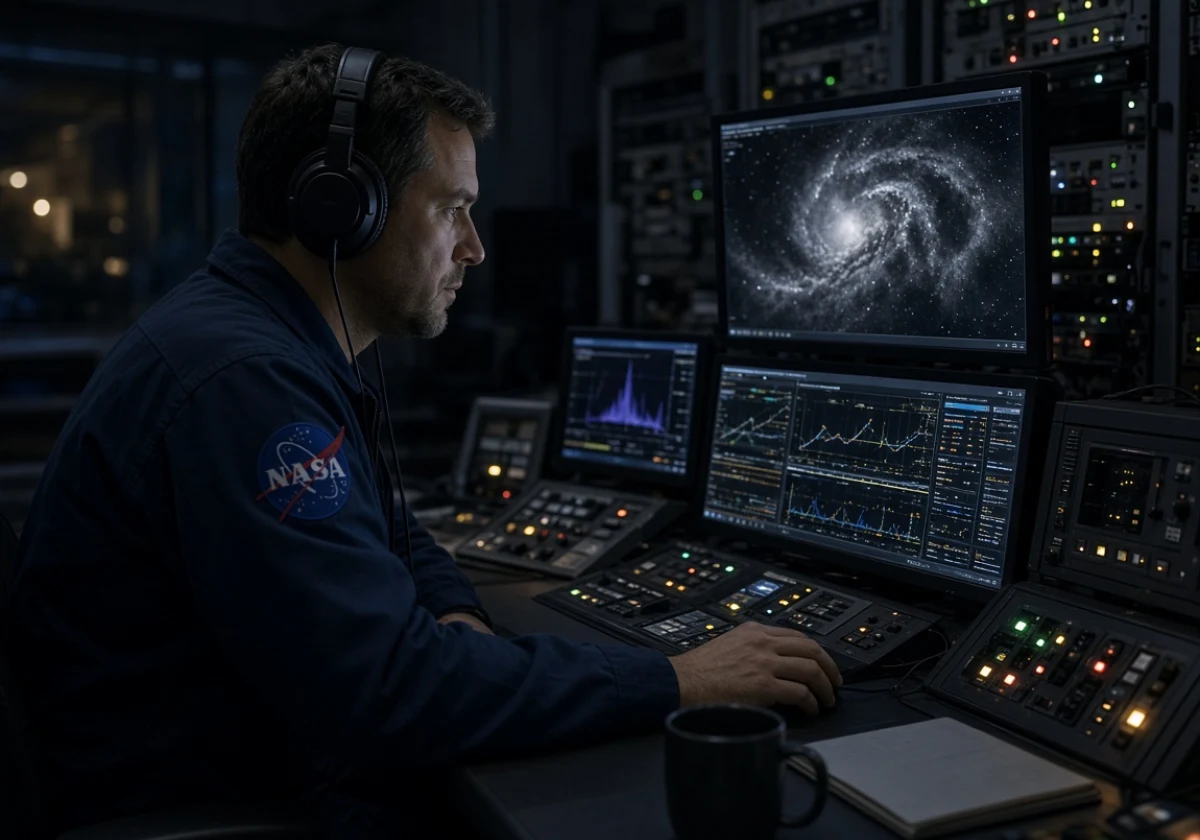
Earth’s atmosphere blurs starlight, which is why astronomers build at high, dry sites like Mauna Kea Observatory in Hawaii. Thin air up there moves less, so faint objects keep their shape in the telescope.
Three parts of the job show how that advantage becomes real astronomy research.
What Observational Astronomy Looks Like on a Working Night
Observational astronomy runs on a planned target list, and the telescope records everything it receives until dawn. Operators check the forecast, open the dome, and hand the instruments to the research team on shift.
Software sorts the incoming data. On the first night of public access, the Rubin Observatory sent out 800,000 alerts on a single night. Those notices flagged swooping asteroids, exploding stars, and flaring supermassive black holes.
Nobody reviews that stream by eye (the alert feed never stops, not even for a minute). Instead, scientists write filters that flag the few events worth a closer look before dawn, while the rest of the survey feeds slower projects on dark energy.
Why Light Pollution Pushes an Optical Telescope Up a Mountain
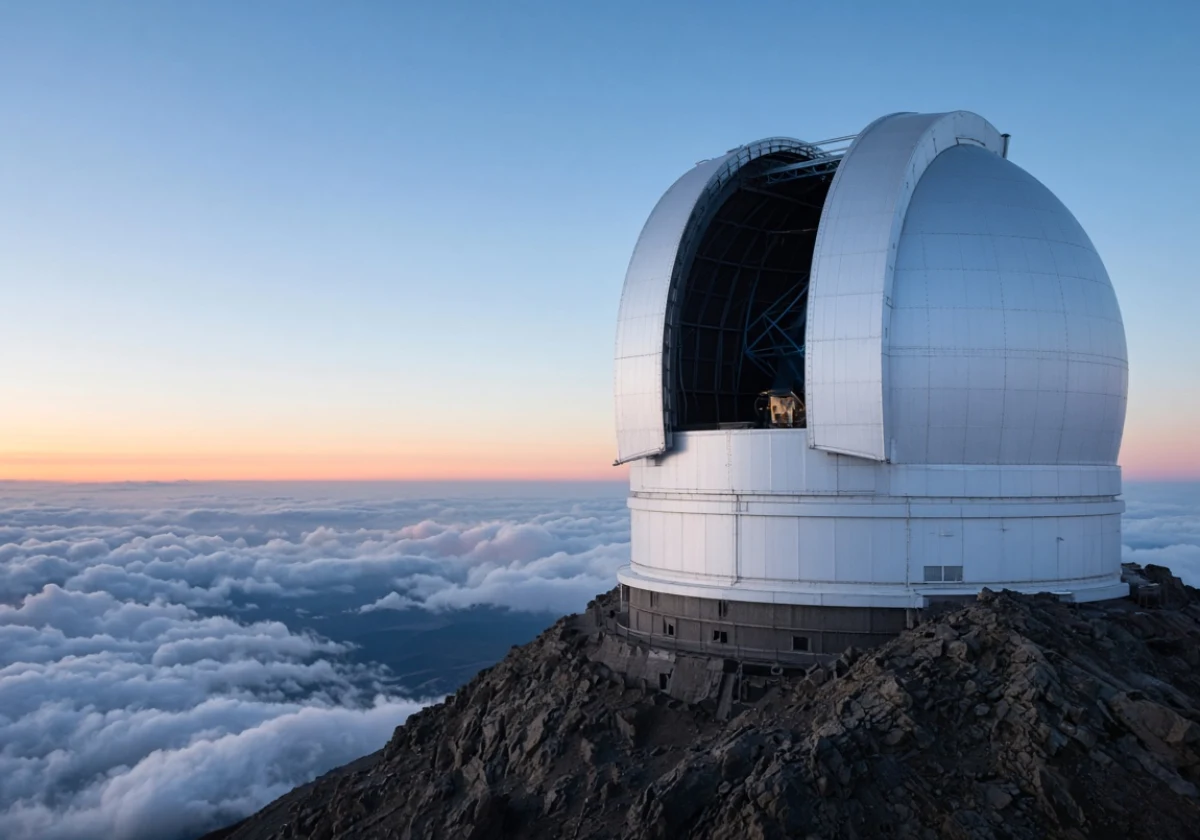
Light pollution and thick air both wash out faint signals, so an optical telescope gains sky with every thousand feet of altitude. Get above the haze and the same mirror returns a cleaner image.
Site choice decides the rest, so survey teams test air steadiness long before anyone pours concrete. Kitt Peak National Observatory and Mauna Kea Observatory both sit where little stirs the upper air. Kitt Peak even runs a solar observatory beside its night-time domes.
Even so, spend one night at a dark sky site and the difference is obvious. Altitude carries a trade-off, though, since cosmic rays hit detectors more often in thin air. Engineers clean those streaks out of the frame before anyone studies it.
How a Night of Old Light Leads to Astronomy Discoveries
Light crosses space at a fixed speed, so it always arrives late. A distant galaxy appears as it did when its light began travelling towards Earth, not as it looks today.
Deep sky surveys use that delay on purpose. By stacking hours of exposure on one patch of sky, astronomers pull out galaxies that formed while the universe was young.
Expansion stretches those old wavelengths toward the red end (redshift is just stretched light, nothing more exotic than that). Infrared astronomy picks up where visible light gives out, which is why it now carries so much of the hunt for the first stars.
Landmark Observatories: From Yerkes Observatory to Keck Observatory
Every site grew around one instrument and one question, and those choices still shape its work today. The table below lines up five famous observatories and the science each one is known for.
| Observatory | Where It Sits | Known For |
|---|---|---|
| Yerkes Observatory | Williams Bay, Wisconsin | The largest refracting telescope in the world |
| Mount Wilson Observatory | California | Edwin Hubble’s proof that other galaxies exist |
| Palomar Observatory | California | Wide-field surveys run by California Institute of Technology |
| Kitt Peak National Observatory | Tucson, Arizona | Solar observatory work and deep sky observing |
| Keck Observatory | Maunakea, Hawaii | Twin 10-meter mirrors aimed at faint, distant objects |
Remember to use the table to quickly place a headline. When a discovery names its observatory, you’ll already know what kind of light that site collects.
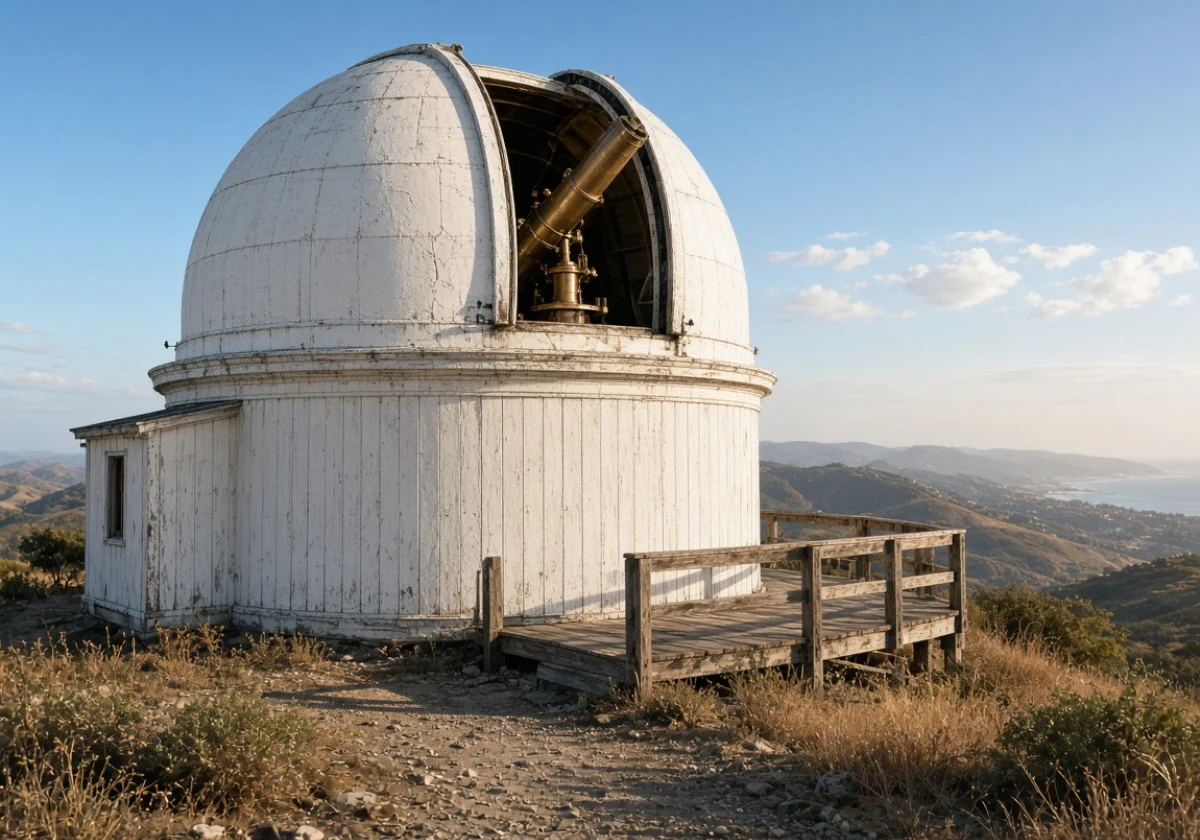
Older sites keep earning their keep. Yerkes was built for the University of Chicago, and Harvard College Observatory still holds a glass plate archive of the sky going back more than a century. Lowell Observatory in Flagstaff, where Pluto was found in 1930, now doubles as a public observatory for visitors.
How Do Space Observatories Like the Hubble Space Telescope Expand Astronomy Research?
Moving past the mountaintops, space observatories expand astronomy research by capturing X-rays, infrared light, and ultraviolet wavelengths that Earth’s atmosphere blocks. A space observatory also escapes clouds, weather, and the daily cycle that limits ground work.
Four advantages explain why NASA keeps building them.
- Wavelengths the Air Blocks: Earth’s atmosphere stops ultraviolet radiation before it ever reaches a mountaintop mirror. The Hubble Space Telescope observes that light directly from orbit. Ultraviolet data from Hubble helped astronomers map the chemical composition of distant galaxy halos, work that ground telescopes cannot replicate.
- Steady Views Without Weather: In orbit, no cloud closes the dome, so one mission can stare at a single field for days. Schedulers at Goddard Space Flight Center plan those runs minute by minute, building enough signal from faint sources to produce a measurable result. The Hubble Deep Field images came from exactly this approach, stacking days of exposure on one small patch of sky.
- Cold Optics For Infrared: Chilling the instruments lets infrared astronomy pick out cold dust that warm ground air hides. The James Webb Space Telescope and its predecessor Spitzer both work this way, with much of the hardware built by Jet Propulsion Laboratory engineers. Webb’s infrared sensitivity has already returned images of galaxies forming within the first few hundred million years after the Big Bang.
- X-ray Views Of Violence: Hot gas near a black hole glows in X-rays that never reach sea level. NASA’s Chandra X-Ray Observatory catches that light, and the Chandra X-ray Center processes the data into maps researchers can use. Those maps have revealed jets of superheated material stretching thousands of light years from the centres of active galaxies.
Taken together, these missions recover the light the atmosphere blocks. Hubble, Compton, Chandra and Spitzer were grouped as NASA’s Great Observatories for that reason, each one tuned to a different band.
From there, choosing the next flagship takes years, and review panels at the National Academy of Sciences rank the candidates before any money moves. Ground sites and space observatories answer different halves of the same question, which is why space exploration planning pays for both.
Connecting Observatory Science to Related Discoveries About the Universe
Edwin Hubble’s work at Mount Wilson Observatory proved the universe reaches far past our own Milky Way galaxy. That result leaned on earlier study at Harvard College Observatory, where Henrietta Leavitt found the Cepheid yardstick astronomers still use to judge distance. Without a reliable ruler, a smudge of light is just a smudge.
From that single result, whole fields opened up. Astronomers now weigh black holes, track exoplanets around other stars, and map how galaxies cluster across billions of light years.
Dark energy arrived the same way, though its discovery came later, after two teams measured distant supernovae and found the expansion speeding up. Results from the Great Observatories filled in the X-ray and infrared halves of that picture.
Amateur astronomers feed actual observations into those surveys too. Astronomy clubs run observing programs of their own, and an amateur telescope on a suburban patio can still time a variable star or catch an asteroid crossing a field.
Beyond individual observers, most large sites treat public outreach as part of the job. Their educational programs put school groups in front of a working eyepiece, which is often someone’s first real look at Saturn.
Closer to home, NASA space exploration missions study our own solar system (our own neighborhood still springs surprises on seasoned observers). Probes photograph Mars, measure particle radiation, and support Earth science programs that watch our planet from orbit.
On a smaller scale, if you’ve ever hunted for Saturn with a backyard telescope, you already know the patience this work takes. Work through one night of raw data and you’ll find most of it is calibration instead of discovery.
The discoveries come later, once researchers test their models against the measurements and one explanation survives.
Your Next Step: Visit a Public Observatory Near You
Every observatory, on the ground or in orbit, builds the record of the universe we share out of faint light. That work runs on clear air, careful pointing, and patience, night after night.
You don’t need a degree to stand under that sky, though. Plenty of observatories and astronomy clubs across the United States run outreach programs with tours, star parties, and talks, so check what’s running near you.
Arizona Observatory shares guidance on night sky viewing for curious beginners and families. Contact us to ask about visiting and plan your first night under a genuinely dark sky.