Why Protecting Dark Skies Benefits Both Wildlife and People
Dark sky conservation reduces light pollution, protects wildlife from disrupted behaviour, and gives communities clearer views of the night sky. And when you aim a floodlight down instead of sideways, you’ll change what feeds, breeds, and finds its way home after dark.
Yet most of us grew up under a permanent orange glow of electric light. That constant glow can make light pollution seem normal, even as it spreads beyond urban areas. At Starhawks Blog, we track that spread because artificial light reaching farmland and coastal areas can disrupt wildlife far beyond city limits.
This guide covers:
- How light pollution affects people and wildlife
- How dark sky areas protect natural darkness
- How you can help reduce light pollution
Look up tonight and see how many stars you can spot.
Light Pollution: Why Natural Darkness Is Disappearing
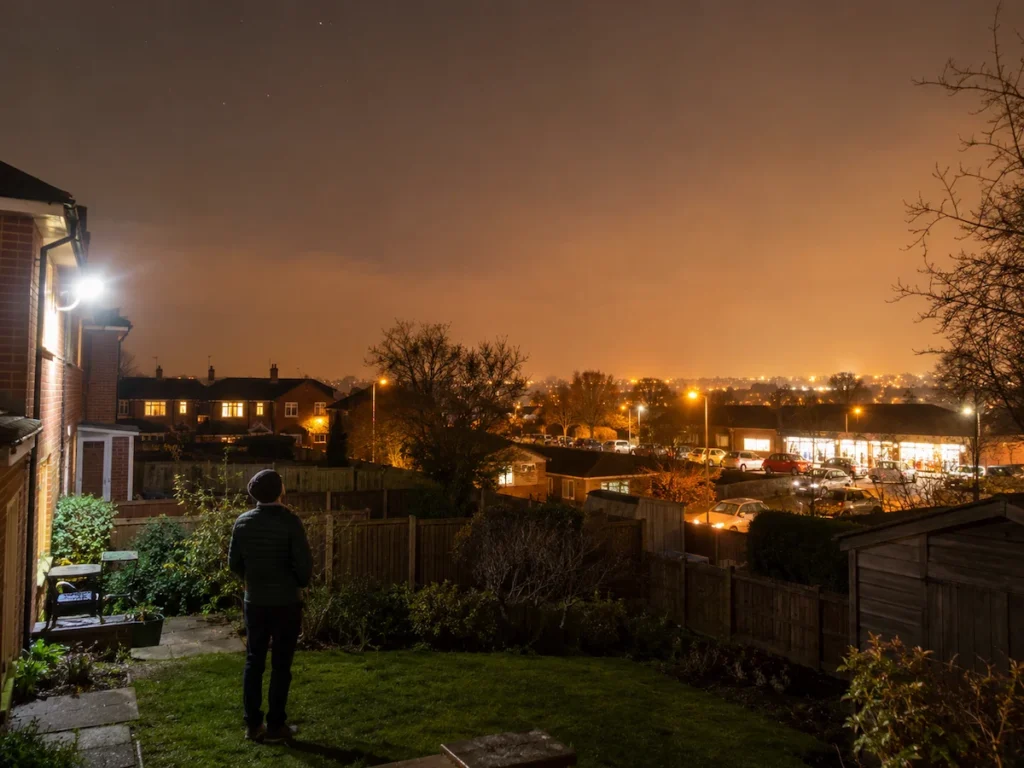
Most people have no idea how much artificial lighting drowns out the stars above their own backyard. This light pollution builds from thousands of small sources, including floodlights, shopfronts, street poles and security globes.
According to a global atlas of night sky brightness published in Science Advances, more than 80% of the world’s population lives under light-polluted skies.
Three effects show up first due to the pollution, and each one lands on a different part of the living world.
How Artificial Lighting Confuses Migrating Birds and Insects
Migrating birds read the stars the way sailors once did. Artificial light can draw them away from their usual routes, increasing the risk of collisions and exhaustion. Insects fall into the same trap, circling a single globe until they drop.
The effects can then spread to plant life. Moths pollinate many night-flowering plants, so fewer active moths can mean fewer opportunities for those plants to reproduce (a job nobody notices until it stops).
Wetlands can be particularly sensitive to this disruption. A poorly directed floodlight can alter insect activity around breeding and feeding areas throughout the night.
Why Human Health Suffers Under a Bright Night Sky
Human health suffers under a bright night sky because your body clock reads darkness as the signal to release melatonin. That hormone settles you into sleep at roughly the same hour each night.
However, artificial light at night can interfere with this natural process. Light entering your bedroom may delay melatonin release, which makes it harder to fall asleep at your usual time.
You may think blackout curtains help, but they only treat the symptom while the sky outside stays washed out (curtains cannot fix the street). These effects on sleep make human health another reason to reduce light pollution, alongside protecting wildlife.
The Growing Glow Over Australian Cities and Coastlines
If you look closer to home, Australia still holds some of the largest stretches of natural darkness on the planet. For example, the glow over Sydney, Perth and the Gold Coast keeps creeping outward.
Coastal development pushes it further. Beachfront lighting reaches far beyond the shoreline and confuses turtle hatchlings, which draws them inland instead of towards the sea.
From our own stargazing trips outside Adelaide, we have found that escaping the city glow often means travelling well beyond the outer suburbs. Even after several hours on the road, the difference only becomes obvious once artificial light fades and the Milky Way becomes clearly visible overhead.
Why Does Dark Sky Conservation Protect Local Wildlife?
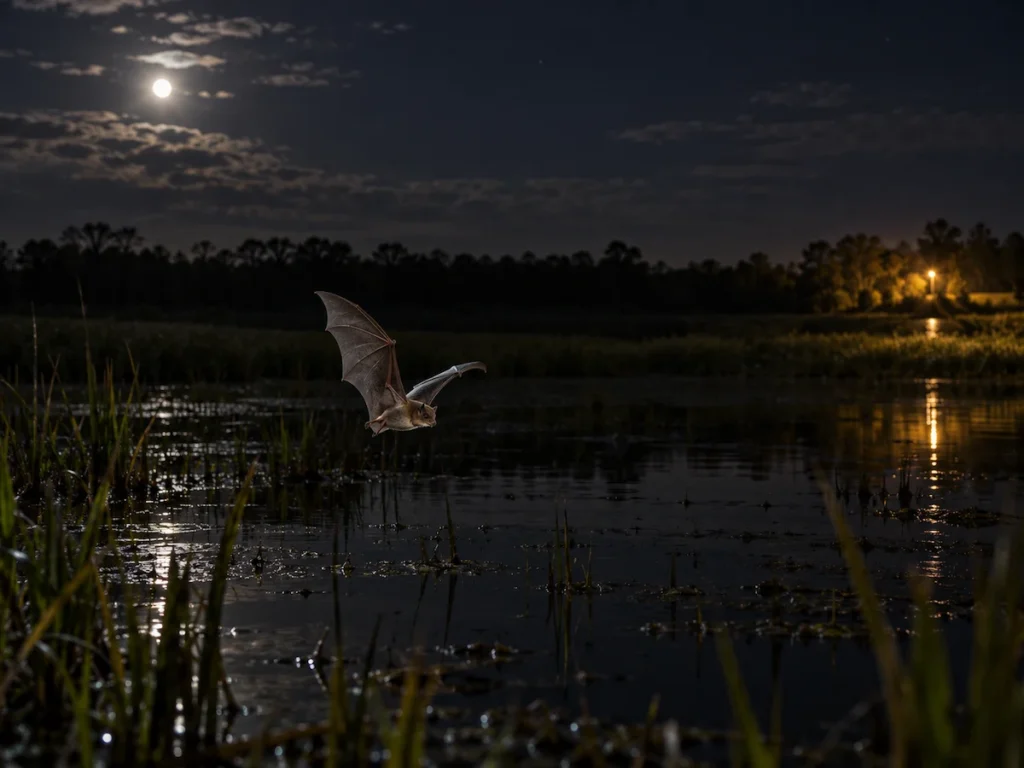
Dark sky conservation protects wildlife by cutting the glare that disrupts feeding, migration, and breeding. Naturally, nocturnal animals evolved under starlight. Even a small lift in brightness changes where they hunt and how far they travel.
For instance, Microbats avoid lit corridors entirely, which cuts them off from feeding grounds they have used for generations. Possums and gliders also treat a lit gap between trees as a wall they will not cross. Such fragmentation shrinks usable habitat without removing a single tree.
Bright nights skew predator-prey interactions, too, since owls hunt with ease while their prey stays hidden and hungry.
Artificial light further disrupts breeding behaviour. Frogs, for example, may call less frequently around illuminated ponds, which reduces opportunities to attract mates during breeding season.
Honestly, a single poorly shielded light near a wetland can therefore affect several nighttime behaviours in the surrounding habitat. Councils can reduce this disturbance by using shielded fixtures and warmer lighting that limits unnecessary light reaching wildlife areas.
Astronomy Escapes: Dark Sky Reserves and National Parks
Dark sky reserves and parks protect areas where artificial light is carefully controlled, which gives visitors clearer views of stars and other night-sky features. These protections usually involve lighting standards that limit unnecessary glare and preserve natural darkness.
For stargazing in Australia and nearby New Zealand, three protected areas are particularly notable:
- River Murray Reserve: South Australia’s reserve earned its title in 2019 and covers more than 3,200 square kilometres of river country.
- Warrumbungle, New South Wales: Warrumbungle became Australia’s first protected park of its kind in 2016. And it sits beside Siding Spring Observatory, the country’s largest optical telescope site.
- Aoraki Mackenzie, New Zealand: Across the Tasman, 4,300 square kilometres of high country sit under lighting practices that Tekapo residents adopted back in 1981.
These dark sky reserves offer excellent viewing conditions without requiring you to travel deep into remote areas. Just don’t forget to pack a jumper, even in January, as clear nights can get surprisingly cold.
Sky Protections and Lighting Policies: What They Protect
Dark sky protections vary according to the type of place being protected and the lighting standards it follows. Some classifications cover remote natural areas, while others apply to parks, surrounding regions, or entire communities.
The table below sorts the four main titles by what each one asks of a community.
| Title | What it protects | Typical setting |
|---|---|---|
| Dark Sky Reserve | A dark core plus a lit buffer zone | Large rural regions |
| Dark Sky Park | Public land with strict lighting rules | National park or state reserve |
| Dark Sky Sanctuary | The most remote and fragile sites | Outback, far from any town |
| Dark Sky Community | A whole town’s lighting policy | Shires and small councils |
Quick Tip: Check which title a place holds before you visit. A Dark Sky Sanctuary protects remote areas with very little artificial light, while a Dark Sky Community focuses on reducing light pollution across a populated area.
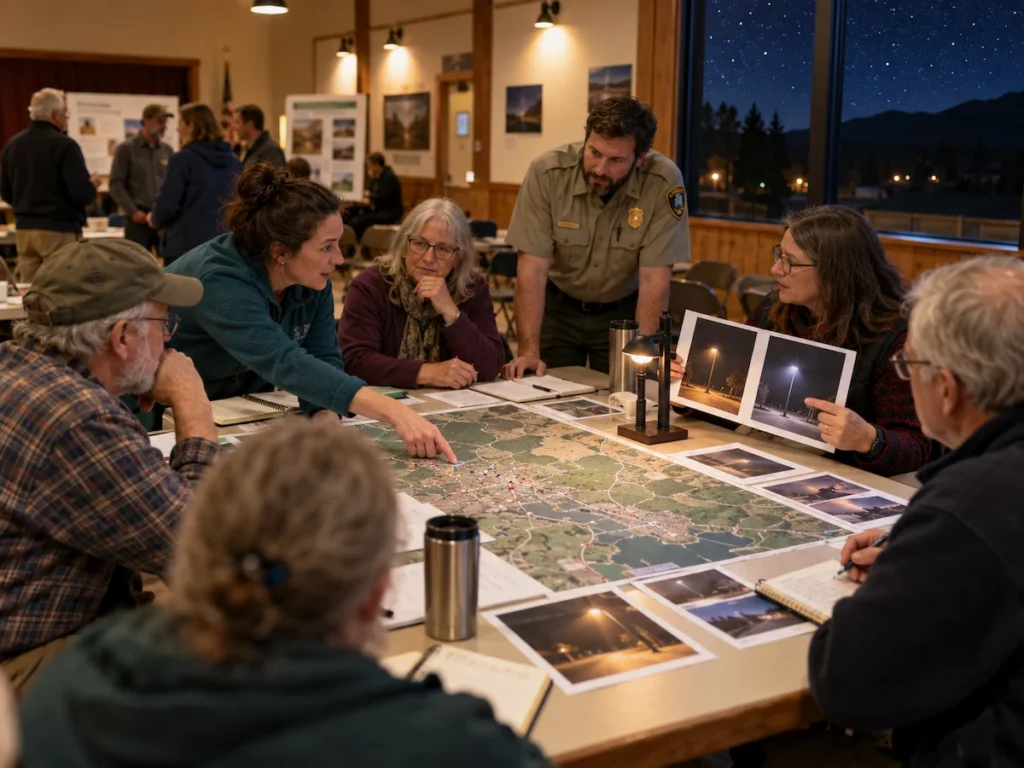
You Can Help With Protecting the Night Sky
Darker nights usually give wildlife their habits back. They also hand you a sky worth standing outside for. And the fix costs very little, since shielded warm globes and motion sensors do most of the work.
You can start reducing unnecessary light around your home and neighbourhood with two simple steps:
- Adjust your porch light
- Raise street lighting with your council
Real dark sky preservation is a long game, and environmentally responsible outdoor lighting is how ordinary streets join in.
Starhawks Blog shares stargazing guides and news for readers across Australia. Ready to see the stars properly? Get in touch with us, and we will point you to the nearest reserve.