How Technology Has Changed the Way We Explore Space
Technology changed the way we explore space by giving us telescopes, spacecraft, and computers that see what eyes cannot. Nearly every big discovery of the past century arrived with a new instrument rather than a new idea.
That shift hasn’t stopped, and it now reaches well past professional observatories. Starhawks Blog tracks new space technology for backyard observers. Many consumer telescopes now carry cooled cameras and tracking mounts that only research labs once owned.
Polished mirrors, rovers, and sorting software all drive astronomy technology forward today. Each one below measures something different, and several new instruments come online within the decade.
Telescopes Then and Now: Astronomy Tools That Changed the View
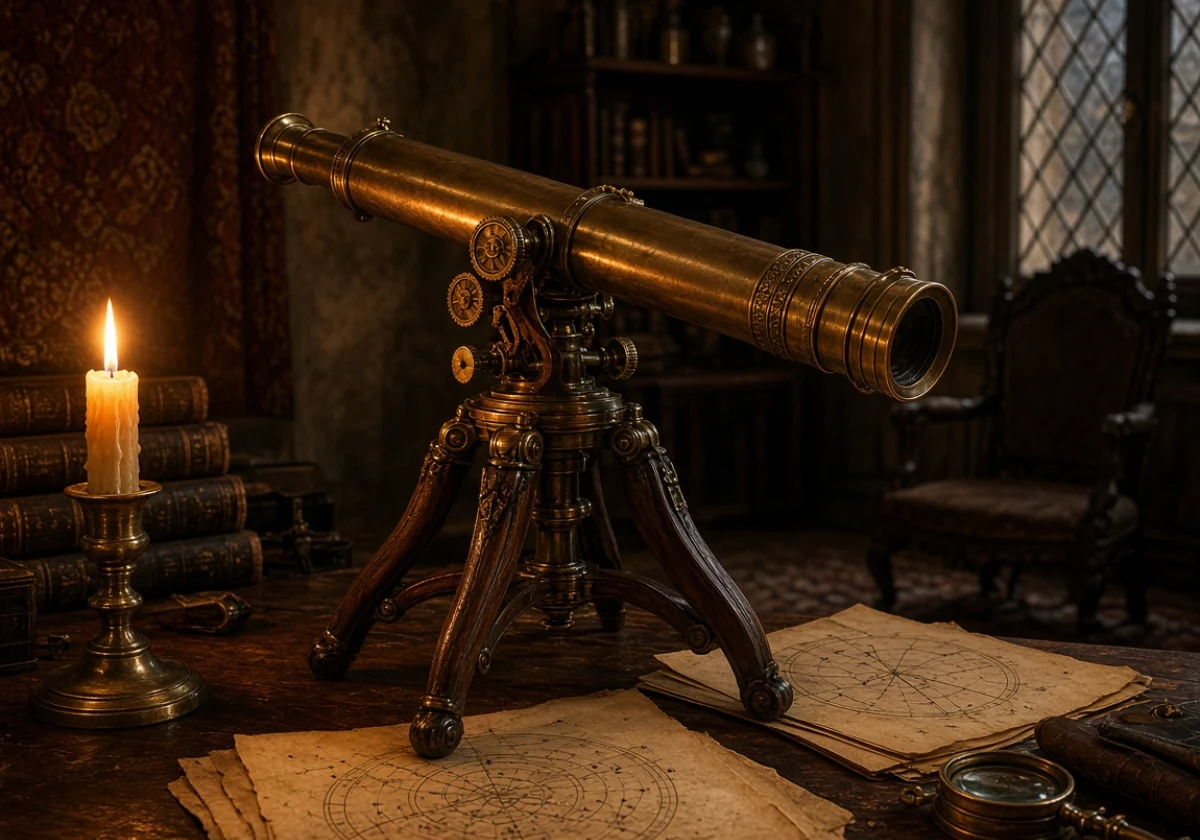
Galileo’s improved telescope magnified about 20 times, just enough to show Jupiter’s moons in 1610. Today’s instruments photograph galaxies billions of light-years away. Bigger mirrors, colder detectors, and a launch above Earth’s air each pushed that reach further.
Lenses gave way to mirrors over time, and reflecting telescopes carried astronomy from the backyard to the mountaintop. Larger mirrors gathered more light. Still, the team behind Starhawks Blog points to detectors as the bigger leap, since digital sensors record far more light than photographic plates.
Three instruments mark the turns in that story, and each one solved a different problem. Hubble orbits Earth, while Webb orbits the Sun nearly a million miles away. The third sits on a tripod in someone’s backyard.
How the Hubble Space Telescope Rewrote the Textbooks
NASA launched the Hubble Space Telescope in 1990. It works because it sits above the air that blurs every view from the ground. From orbit, it pinned down how fast the universe expands. Its supernova observations later helped confirm dark energy, which ground-based teams first reported in 1998.
Evidence of that work sits in the scientific literature. Hubble’s data still drives new research over three decades after launch. Since 1991, scientists have published more than 22,000 peer-reviewed papers using it, according to Hubble publication totals from STScI.
Hubble also changed what people expect a picture of space to look like (those posters hung in nearly every classroom). Its Deep Field images, for example, revealed thousands of faint galaxies in tiny patches of deep space that looked empty.
Why the James Webb Space Telescope Sees Deeper Into Space
Webb sees deeper because it reads infrared light instead of visible light. Infrared slips through the thick dust clouds that hide star formation from every optical telescope.
Distance adds to that advantage, since the expanding universe stretches ancient light towards infrared wavelengths. So Webb reaches galaxies that formed soon after the Big Bang, which no earlier instrument could resolve.
Webb also reads the air around exoplanets for gases tied to the search for life in the universe. Its tennis-court-sized sunshield blocks heat from the Sun and Earth. That shield keeps the optics cold enough to detect weak infrared signals (warm optics would glow and drown them out).
Smart Telescopes Put Scientific Instruments in the Backyard
Back on the ground, smart telescopes solved the problem that kept most beginners out: setup. These scientific instruments point, focus, and stack their own images, so the fiddly part of amateur astronomy disappears. You tap a target on your phone, and the mount finds it in seconds.
From there, the software stacks short exposures until faint deep-sky objects and Milky Way star fields brighten on screen. Good astronomy tools manage this from a suburban backyard, where streetlights wash out the night sky in a single long exposure.
Help a beginner find their first galaxy, and you’ll notice the same thing every time. People stay outside longer when the gear cooperates, and they start asking questions about the stars and planets above them.
How Does Modern Astronomy Use AI and Big Data?
Telescopes now collect more images each night than any team could check by hand. So software makes the first pass through millions of frames every night and flags the events people would miss.
Consider the Vera C. Rubin Observatory in Chile, which photographs the whole southern sky every few nights. Its pipeline sends out up to 10 million alerts each night, each one a potential cosmic event, as Rubin Observatory’s nightly data deluge describes. That stream arrives faster than any person could open it, let alone judge it.
Machine learning models then rank those alerts and separate asteroids from supernovae, variable stars, and other cosmic objects in seconds. Software also scrubs the streaks that satellite constellations leave across long exposures. Astronomers then study only the short list. That shift changed their daily job, since half the work of a modern telescope now happens in software.
Some events demand an even faster response. When the Swift Observatory detects a gamma-ray burst, it swings its X-ray telescope onto the source within minutes. That speed lets astronomers catch the afterglow before it fades.
Artificial intelligence also scans survey images for rare patterns, such as gravitational lenses. A lens forms when a galaxy’s gravity bends light from objects far behind it. Dark matter bends light too, even though the mass itself stays invisible. Each confirmed lens adds another measurement to the map of where that unseen mass sits.
Put it this way: if you’ve ever tried to label a few hundred vacation photos by hand, you know how fast that breaks down. The same sorting tools built for the sky now work on Earth, too. Climate scientists use them to sort satellite records of ice and storms.
Space Exploration Technology: Robots, Rockets, and Probes
Robotic space missions explore places no astronaut could survive, such as the solar corona or the icy moons of Jupiter. You’ve seen the rover photos, and each one came from a machine that will never return home.
Each mission type below covers a different destination, and the list runs outward from the Sun to the giant planets. Spaceships and rockets get the attention, but the instruments riding on them do the science.
- Sun-Grazing Probes: NASA’s Parker Solar Probe flies through the solar corona, the Sun’s outer atmosphere. Its instruments trace where the solar wind begins, a region no ground telescope can measure. The same solar wind drives auroras, so check space weather forecasts before a northern night out.
- Rovers and Landers: Wheeled labs on Mars drill rock, run chemistry, and radio the results to engineers at NASA’s Jet Propulsion Laboratory. Their findings suggest water once pooled on the surface for long periods. NASA posts raw rover images online, so you can browse new shots within days.
- Outer Planet Flybys: Probes flying past Jupiter and Saturn map icy moons, celestial bodies that likely hide liquid oceans under their crusts. Only one space probe, ESA’s Huygens, has landed on such a world, touching down on Titan in 2005. Europa Clipper reaches Jupiter in 2030, so watch for its first close-up images of Europa.
- Commercial Space Launchers: Privately built rockets now land their boosters upright and fly them again. Reuse lowers launch costs and opens space travel to more customers. The same vehicles carry crew and cargo to the International Space Station. Universities can also buy room on shared launches to put small satellites in orbit.
Together, these missions supply ground truth that no telescope can gather from a distance. Each one began as space exploration technology built to answer a specific question, such as whether Mars once held water.
New Astronomy Technology Will Reveal Stars, Galaxies, and the Early Universe
The next decade brings instruments that will outperform anything in service today. Crews are building several of them right now in Chile, Australia, and South Africa. Each one targets a question today’s telescopes can’t answer.
Four of them are worth knowing by name. The table below lines up each one against what it will chase.
| Instrument | What it will study | Why it’s different |
|---|---|---|
| Giant Magellan Telescope | Planets circling nearby stars | Seven of the world’s largest mirrors act as one surface |
| NASA’s Nancy Grace Roman Space Telescope | Dark energy across wide sky fields | A space observatory with Hubble-class sharpness over far more sky |
| Square Kilometre Array | Neutron stars and fast radio bursts | Linked dishes on two continents work as one radio telescope |
| Next-generation wave detectors | Gravitational waves from distant black holes | Laser interferometer arms measure ripples in space itself, not light |
Several of these projects plan to share data publicly, so anyone curious about space science can follow along. NASA plans to release Roman’s survey data with no exclusive access period for its science teams. Bookmark each project’s news page to catch first results as they come out.
Keep Looking Up: Your Front Row Seat to Space Exploration
You can follow every mission in this guide from home, and most post new images within days of capture. Check NASA’s and ESA’s mission pages once a week to keep up.
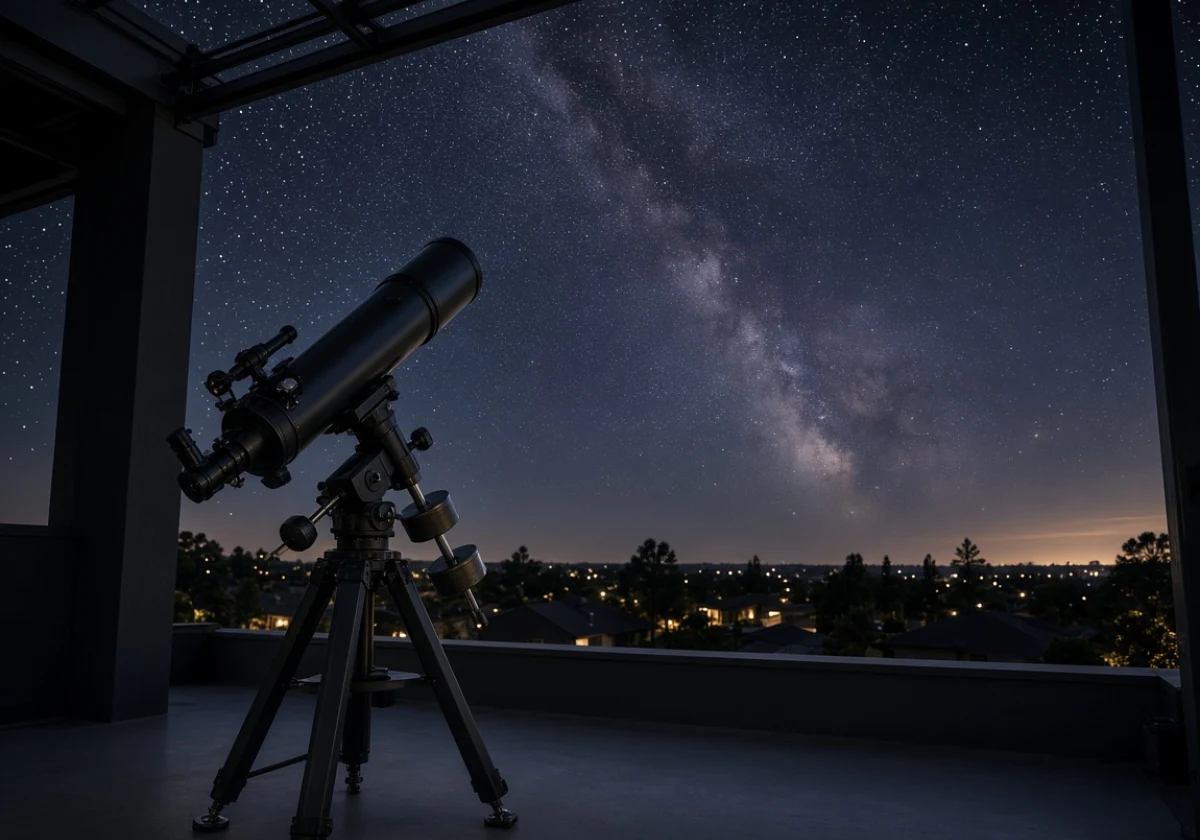
You don’t need a research budget to join in. A pair of binoculars, a dark site, and a clear night will show you Jupiter’s moons.
Arizona Observatory shares practical guidance for anyone picking a first telescope or planning a night under the stars. Contact the Arizona Observatory team to ask what suits your sky and your budget.