The Science Behind How Astronomers Study Distant Objects
Astronomers study distant stars and galaxies by collecting the light they send across space. No one has ever touched a star, yet we know what stars are made of, how hot they burn, and how fast they move.
That knowledge comes from steady measurement rather than guesswork, and it underpins how scientists understand the universe today. At Starhawksblog we treat the night sky as a record that anyone with the right tools and some patience can learn to read.
Light holds the first clue. It carries a star’s makeup, temperature, and motion. Distance comes next, measured in stages that each check the one before. Centuries of history and today’s telescopes complete the picture.
How Astronomy Uses Light and Distance
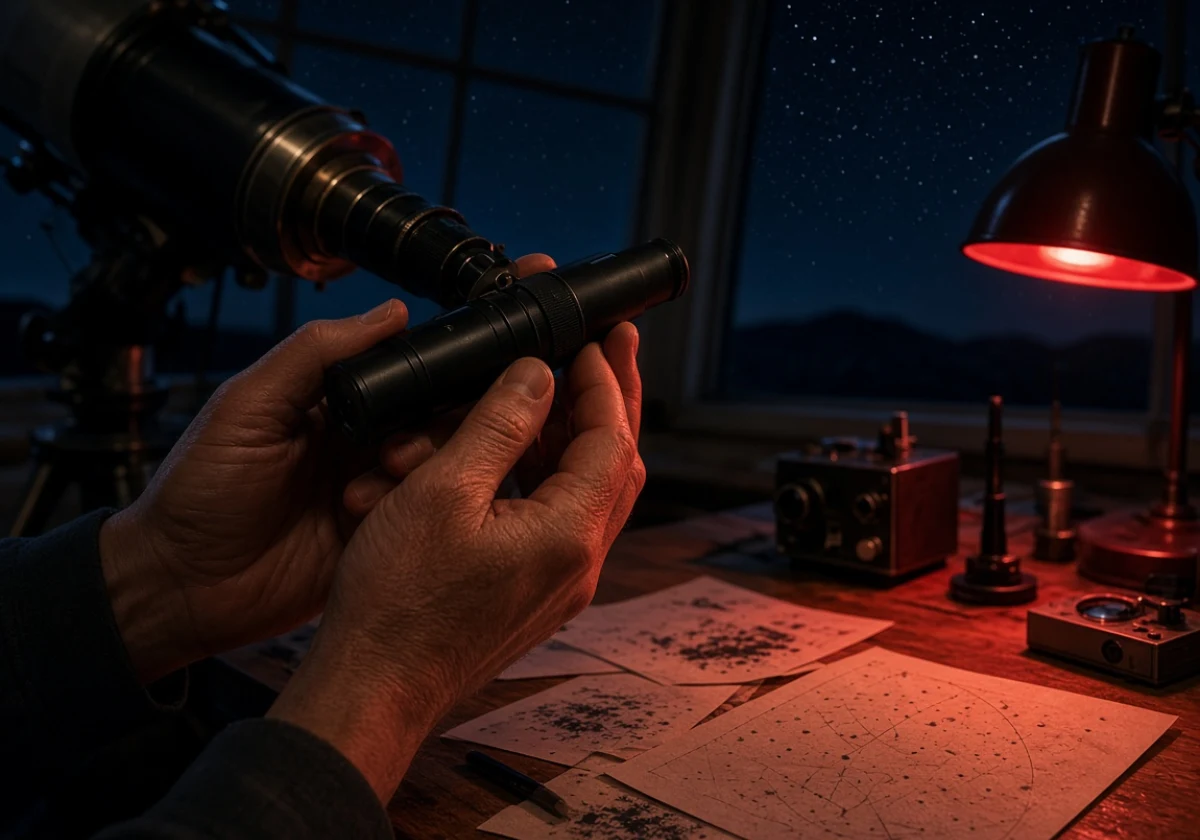
Nearly everything astronomers learn arrives as light. Stars lie far beyond the reach of any probe or laboratory. Distance is just as important. A star’s true brightness and size stay hidden until you know how far away it is.
The three sections below show how a faint beam of starlight reveals what a star is made of and what lies around it.
What Light Reveals When Studying Stars
Starlight carries information because its color, brightness, and timing all depend on the star that sent it. Studying stars starts with color, since hotter surfaces give off more blue light and cooler ones glow red. The Sun falls in the middle at about 5,800 kelvin and looks yellow-white to us.
Timing comes next, because some stars pulse on a fixed schedule you could set a clock by. Astronomers call the best-known group Cepheid variables, and a slower pulse means a brighter star. Time that rhythm, and you’ll know how bright the star truly burns.
Brightness then gives you distance. Compare how bright the star looks from Earth with its real output, and the gap will reveal how far away it is.
Reading a Spectrum Like a Fingerprint
Spread starlight through a prism, and it opens into a spectrum running from red to violet. That rainbow is only one thin band of electromagnetic radiation. Dark lines cut across it at exact positions, and each line marks light that a particular element absorbed.
Every element leaves its own set of lines, much like a fingerprint. Hydrogen leaves one pattern, and helium leaves another. Here physics and chemistry meet. Lab tests on Earth tell astronomers which lines belong to which element. Glowing clouds like the Helix Nebula flip the effect and show bright lines where a star shows dark ones.
The whole pattern also shifts when the source moves along our line of sight. Lines slide toward blue as a star approaches and toward red as it moves away. One exposure can give a star’s makeup, temperature, and speed towards or away from us.
Why Gravity and Motion Reveal Hidden Astronomical Objects
Gravity reveals hidden objects because anything with mass tugs on whatever lies near it. The tugging body may stay out of sight, but its pull still shows up in the objects moving around it.
A star that wobbles on a fixed cycle, for example, often has a planet circling it. Stars whipping around the center of the Milky Way follow the same logic. Their tight, fast orbits point to a black hole about four million times the Sun’s mass.
Gravity bends light as well, so a heavy galaxy can magnify a more distant one behind it. Astronomers call those magnifiers gravitational lenses. Researchers use these natural lenses to reach astronomical objects too faint for any telescope to catch directly.
From the Solar System to Deep Space: How Astronomers Measure Distance
Once you can read light, distance becomes the next problem. Proxima Centauri, the nearest star beyond our solar system, lies about 4.2 light-years away. That gap equals roughly 25 trillion miles, yet it still counts as close.
This table lines up four methods astronomers use to place celestial objects. Each one covers a wider stretch of space than the method before it.
| Method | Where It Works | What It Measures |
|---|---|---|
| Radar ranging | Inside the solar system | Bounces a radio signal off a planet or moon and times the echo |
| Parallax | Nearby stars | Tracks a star’s small shift against the background as Earth orbits the Sun |
| Standard candles | Other galaxies | Compares white dwarf stars that explode at a known brightness |
| Redshift | The most distant objects | Reads how far the expanding universe has stretched light from the early universe |
Eyeballing distance fails fast, as anyone who has misjudged a streetlight on a dark road knows. Astronomers solve that problem by stacking these methods into a distance ladder. Each rung calibrates the one above it, so one bad measurement low down will shift every figure higher up.
Pulsing stars carry the ladder past the Andromeda Galaxy, the nearest large spiral galaxy to our own, and on to the Virgo cluster. Exploding white dwarfs reach billions of light-years farther, and redshift takes over for the most distant galaxies.
Tracing the History of Astronomy From Stargazers to Space Research
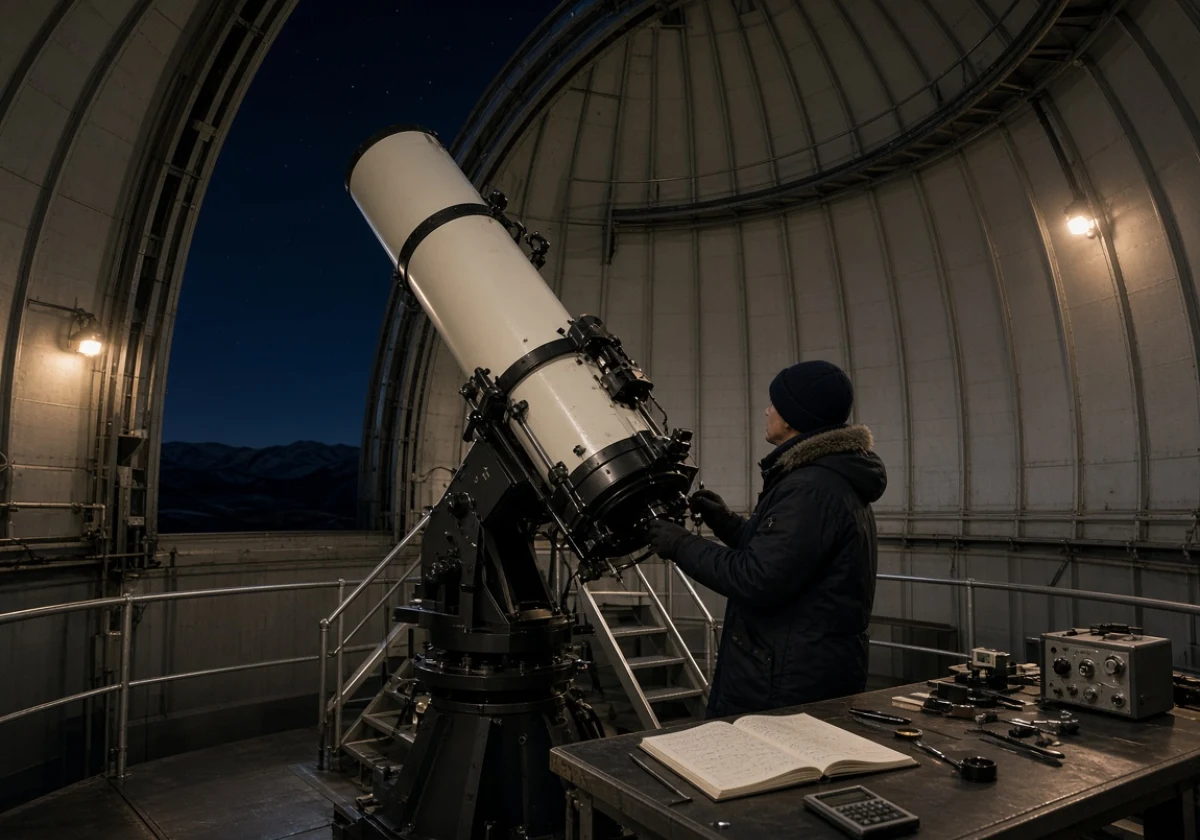
Today’s space research moves fast, yet the field began with sky watchers using only their eyes. In ancient astronomy, Babylonian scholars tracked the moon and planets for centuries and kept careful written records. Those records let them predict lunar eclipses and flag likely dates for a solar eclipse.
Greek thinkers then added geometry. Eratosthenes measured Earth’s size when others argued over what circled what. Most settled on Earth at the center, and that model held for about 1,400 years.
Nicolaus Copernicus challenged it in 1543 by placing the Sun at the center instead. Evidence came in 1610, when Galileo turned his new telescope on Jupiter and found four moons orbiting it. Those moons showed that not everything circled Earth. You can still spot them yourself with steady binoculars.
Telescopes kept growing, and in 1781, William Herschel spotted Uranus, the first planet found by telescope. By the 20th century, physics drove most of the work, and astronomy and astrophysics merged into one field. Scientists worked out how stars fuse hydrogen into helium, while space science and planetary science grew into separate specialties.
The Big Bang model, backed by evidence from the 1960s onward, changed the study of the universe. NASA missions then carried space exploration to every planet circling the Sun. Today, our understanding of the universe puts its age at roughly 13.8 billion years. Our galaxy alone holds an estimated 100–400 billion stars.
Telescopes and Teamwork Push Astrophysics Beyond Visible Light
Today’s astronomers rely on a mix of tools, and each one opens a different window on astrophysics. Some catch radio waves or infrared light. Meanwhile, detectors such as LIGO pick up gravitational waves from distant cosmic collisions. The list below pairs each tool with the work it does best.
- Space Telescopes: Orbiting instruments like the Hubble Space Telescope and the James Webb Space Telescope work above Earth’s atmosphere. Hubble covers ultraviolet and visible light, and Webb focuses on infrared light that the air largely blocks. Infrared astronomy needs that height because water vapor soaks up much of that light before it reaches the ground.
- Radio Astronomy: Dishes on the ground pick up radio waves from cold clouds of gas and dust and from the disks around black holes. Those signals slip through the haze that blocks visible light. A spinning neutron star shows up here. Its strong magnetic field sweeps radio beams past Earth like a lighthouse.
- Ground Observatories: High, dry sites such as Maunakea in Hawaii hold some of the largest mirrors in the United States. Keck Observatory’s twin telescopes operate there, and the European Southern Observatory runs its own giant telescopes high in Chile’s Atacama Desert. The Maunakea Observatories collaboration describes the mountain as the most scientifically productive astronomy site in the world.
- Shared Data: Public archives let anyone download raw observations and test the same ideas professionals do. Many students get their first taste of astronomical research this way. The Rubin Observatory’s first imagery release notes that dark matter and dark energy make up 95% of the universe. Rubin’s decade-long sky survey will give researchers fresh data to study both.
Observational astronomy splits the sky by wavelength, so no single instrument does the whole job. Radio, infrared, visible, and gamma-ray telescopes each catch a slice the others miss. Gamma-ray light never reaches the ground, so NASA’s Fermi telescope collects it from orbit. Pick the wavelength first, and the right instrument will follow.
Take Your First Steps Under Dark Skies
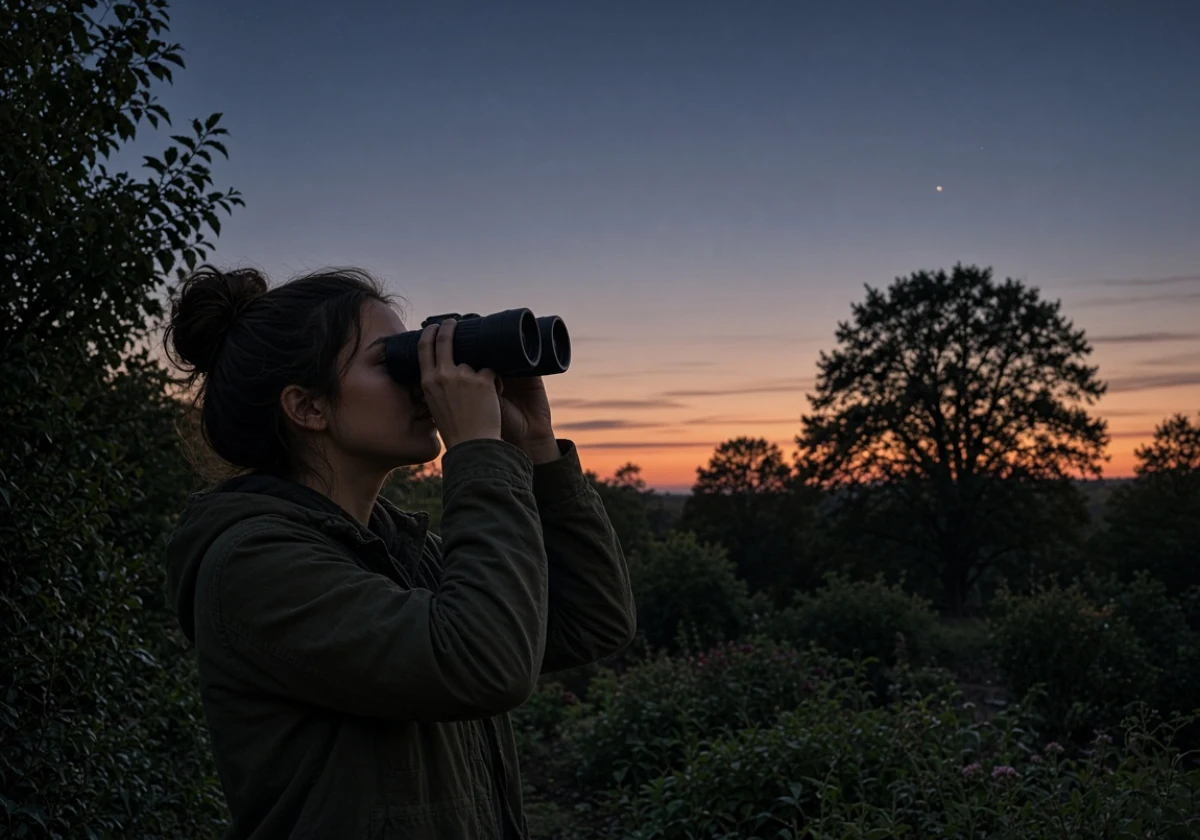
Every method in this guide starts with light, and that light reaches anyone who steps outside after dark. You don’t need a big instrument to begin.
Start with the moon and the brighter planets, then learn a few constellations each season. Once those feel familiar, try a small telescope or join a local astronomy club for guided viewing nights.
At Arizona Observatory, we share practical guidance for new and returning stargazers across the state. Get in touch with our team to plan your night under dark skies or ask about anything this guide didn’t cover.