The Role of Astronomy in Understanding Earth’s Place in Space
Astronomy helps us understand Earth’s place in space and how its movements affect everyday life. These movements influence the time, seasons, and night sky we experience.
Most of us learn these astronomy facts at school but rarely think about them afterwards. Yet you can observe many of their effects simply by watching the sky. At Star Hawks Blog, we help people connect what they see overhead with the science behind it.
This guide explains how Earth rotates, what satellites reveal about our planet, and how the Moon and Sun influence tides and eclipses. Let’s learn how Earth compares with other planets in our solar system.
Earth in Space: A Planet in Constant Motion
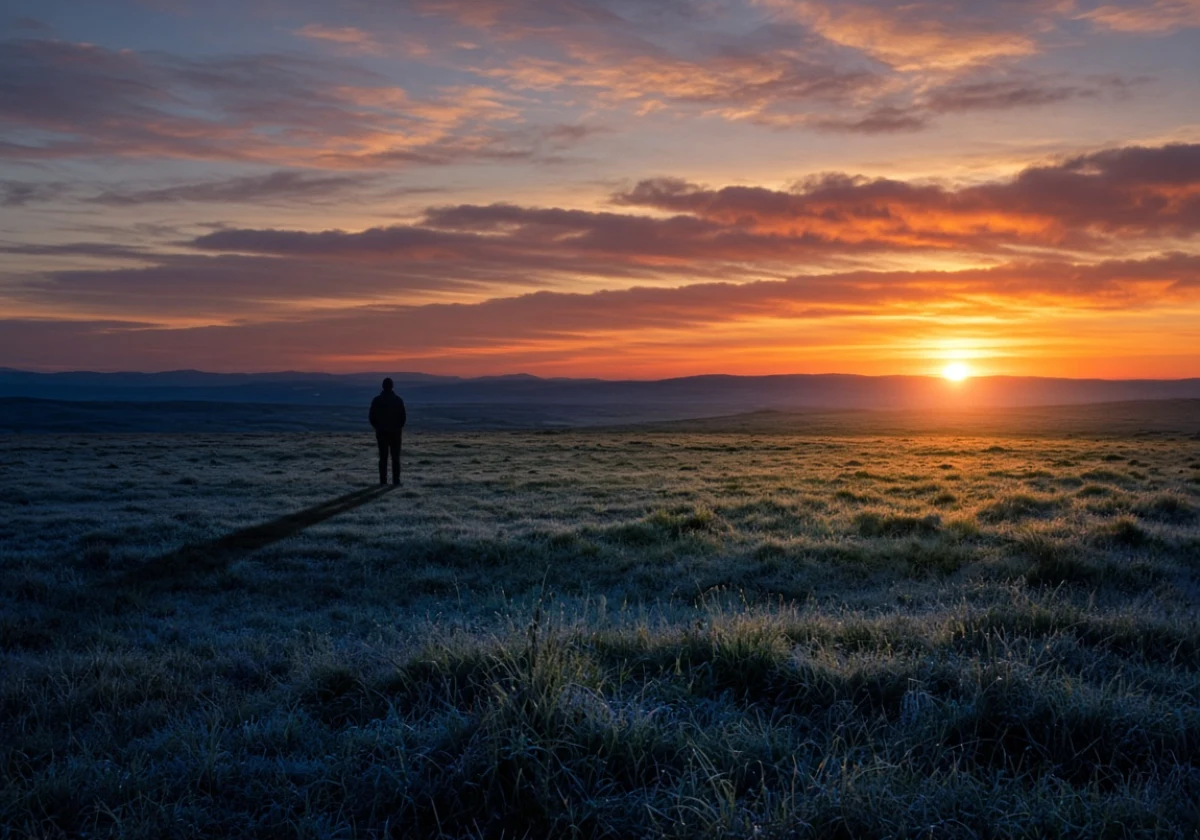
Right now you’re spinning at about 1,000 miles per hour without feeling a thing. Picture Earth in space as a moving object, and the rest of the sky starts making sense. That’s only one of Earth’s motions through space.
In total, three motions explain how Earth spins on its axis, orbits the Sun, and travels around the Milky Way.
How Earth’s Spin Sets the Length of Day
Earth completes one rotation on its axis in about 24 hours, which gives us the daily cycle of sunrise and sunset. Near the equator, daylight stays close to 12 hours throughout the year, although the exact duration varies slightly.
But why don’t we feel Earth’s rotation? You, the ground, and the surrounding atmosphere move together, so there’s no sudden change in speed to notice. Gravity keeps you on the ground as the planet turns.
Earth also rotates eastward, which explains why the Sun appears to rise in the east and set in the west. The Sun’s apparent movement across the sky comes mainly from that rotation, rather than the Sun moving around us.
Earth’s Orbit and the Tilt Behind the Seasons
While Earth spins each day, it completes one orbit around the Sun in about 365.25 days. However, the changing seasons come mainly from Earth’s axial tilt of roughly 23.5 degrees, rather than its distance from the Sun.
Around June, the Northern Hemisphere tilts toward the Sun and receives longer days and more direct sunlight. Six months later, it tilts away, which brings shorter days and less direct sunlight. The Southern Hemisphere experiences the opposite seasonal pattern.
Interestingly, Earth reaches its closest point to the Sun in early January, during winter in the Northern Hemisphere. That timing shows why the angle and duration of sunlight have a greater effect on seasons than orbital distance.
The Galaxy Carries Us Along at Its Own Pace
Zoom out and the solar system travels too. Astronomers at the National Radio Astronomy Observatory have pinned down the distance to the galactic center: about 26,000 light-years, with the Sun in the Orion spiral arm.
That said, the Sun takes roughly 230 million years to complete one orbit around the galaxy. Earth and the other planets travel with it, so our solar system never stays in one fixed position in space.
Our position in the Milky Way basically gives astronomers a starting point for studying the wider universe. By observing stars and galaxies through ground-based and space telescopes, scientists can investigate distant objects, including black holes.
What Does the View From Space Reveal About Earth?
Let’s come back from the galaxy and look at the planet itself. From space, Earth looks like a blue marble wrapped in white clouds, deep oceans, and brown land.
You’ve probably seen that shot without reading it closely. Blue means water across most of Earth’s surface, and the white swirls are clouds formed from water vapour, one stage of the water cycle. Those clouds sit in an atmosphere of mostly nitrogen and oxygen.
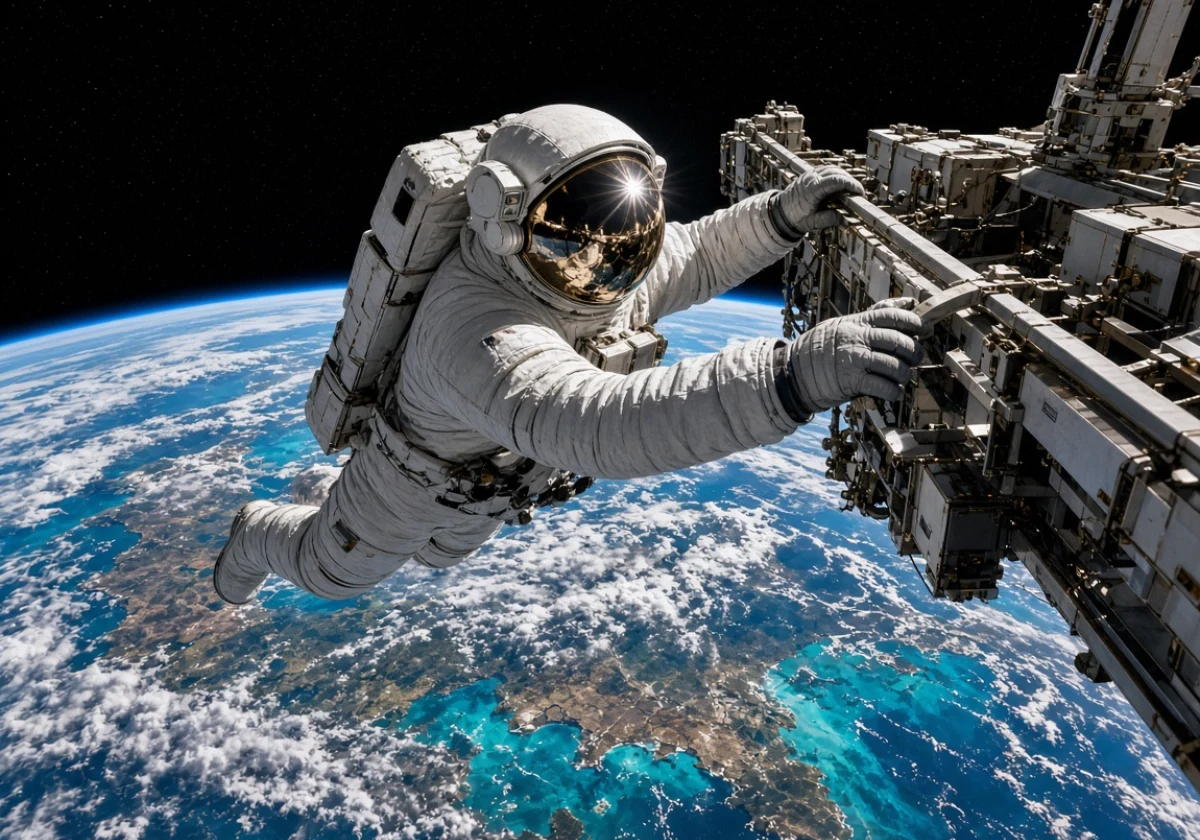
Astronauts aboard the International Space Station see these features from a different angle as they orbit Earth about 16 times daily. You might even spot the station yourself on a clear night. It appears as a steady, bright point crossing the sky in a few minutes (no blinking lights, which helps distinguish it from aircraft).
While astronauts see Earth firsthand, satellites help scientists track changes across the planet. NASA’s Goddard Space Flight Center publishes satellite images of Earth. Researchers use these images to study changes across the oceans, land, and atmosphere.
One feature never shows up in any photo, though. Deep beneath Earth’s surface, movement in its liquid outer core generates a magnetic field that helps protect the planet from the solar wind.
The Moon and the Sun: Earth’s Closest Companions in Space
The Sun supplies nearly all our energy, and the Moon sits close enough to tug on the planet. These movements often spark questions from visitors to Star Hawks Blog, especially about the following three effects.
- Tides Track the Moon: Water nearest the Moon feels a stronger gravitational pull, while another tidal bulge forms on Earth’s far side. That pairing gives most coasts two high tides a day. The Sun’s gravity affects tides too. When the Sun, Moon, and Earth line up, their combined effects produce higher high tides and lower low tides.
- Eclipses Need a Straight Line: During a solar eclipse, the Moon passes between Earth and the Sun and casts its shadow on our planet. If you reverse the order, Earth’s shadow causes a lunar eclipse. Yet eclipses don’t happen every month because the Moon’s orbit tilts about five degrees relative to Earth’s orbit around the Sun.
- Locked Into One Face: The Moon rotates once on its axis during each orbit around Earth, so nearly the same side always faces us. Astronomers call this tidal locking. However, slight changes in our viewing angle let us see about 59% of the lunar surface over time. NASA’s Artemis II mission is designed to carry astronauts around the Moon, including views of its far side.
You can see the Moon’s influence on tides by comparing its phases with local tide predictions over a month. The difference between high and low tides is often greatest around the new and full Moon.
Comparing Earth With Other Planets Through Planetary Science
After exploring Earth’s relationship with the Moon and Sun, now we’ll see how our planet compares with the others. Space exploration has helped scientists study their size, distance, and surface conditions.
The table below compares Earth with other worlds using three measures.
| Measure | Earth | Other worlds |
|---|---|---|
| Order away from the Sun | Third planet from the Sun | Mercury Venus Mars Jupiter Saturn Uranus Neptune Pluto |
| Average distance from the Sun | About 93 million miles | 36 million to 2.8 billion miles |
| Liquid water | Covers most of the surface | None on any surface today |
By diameter, Earth ranks fifth largest among the eight planets. But size alone doesn’t explain why Earth supports life. According to the Smithsonian’s comparison of planets, Earth remains the only planet in our solar system known to support life.
Our planet has stable surface water, a protective atmosphere, and temperatures that allow life to survive. Other worlds may have some suitable conditions, but scientists haven’t confirmed life anywhere beyond Earth.
Take These Astronomy Facts Outside Tonight
Earth’s place in space comes down to a few steady motions you can check yourself. Once you know the spin, the orbit, and the Moon’s cycle, the sky reads like a clock.
On a clear night, take a few minutes to observe the Moon, with or without binoculars. Watch it over a week and notice how its illuminated portion changes. You might as well record what you see each night to follow the lunar cycle yourself.