Why Astronomy Education Inspires Scientific Thinking
Astronomy education inspires scientific thinking because students observe the night sky, ask related questions, and weigh evidence for themselves. That order mirrors how working scientists build knowledge, and it sticks longer than a memorized fact. Star Hawks Blog builds its guidance around that order, which starts with what the sky shows and lets the explanation follow.
This guide covers how observation becomes reasoning and which free resources hold up in a real classroom. You’ll also see how space science fits physics and how solar system study compares with other STEM education paths.
Read on and pick the approach that suits your classroom best.
Why Does Astronomy Education Build Scientific Thinking Skills?
Astronomy education builds scientific thinking skills by making observation, questioning, and evidence-based reasoning part of everyday science learning. That works because students can collect their own data from a backyard, which only a few other subjects allow. As a result, they learn from what they see instead of from a textbook chapter.
Now, let’s have a look at how astronomy education builds scientific thinking.
Watching the Night Sky Teaches Careful Observation
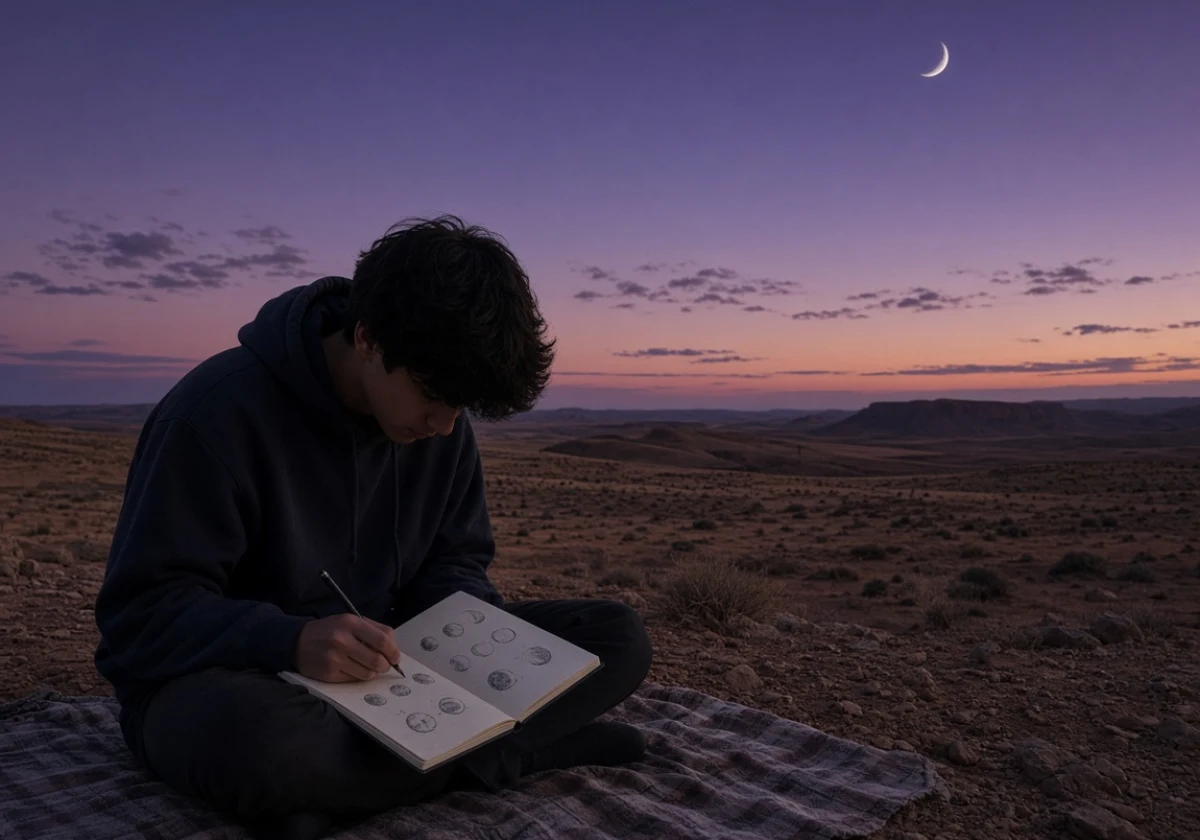
Careful observation begins with noticing what changed since last time. Most astronomical phenomena move slowly, which gives students time to notice small shifts. A class that sketches the moon’s shape for two weeks stops guessing and starts recording the actual phenomenon.
Dark skies make that work easier, and America has plenty of them. Out there, the stars and galaxies that city light hides come back into view. That means one trip outside Flagstaff can replace the worksheet with real data (pack layers of clothes before leaving, since desert nights get cold quickly).
The main skill students build from these nights is patience, which comes from watching the sky night after night. They learn that one night of data proves very little on its own, since haze, a bright moon, or a misread sketch can skew a single record.
How Questions About the Universe Spark Science Learning
Questions push science learning forward when they can’t be settled by a quick search. For example, asking why Mars looks red forces a student to reason from evidence.
Teachers and students both notice that gap between curiosity and answer, and it’s where learning astronomy gets interesting. In practice, the astronomy topics worth teaching are the ones you can’t close in one sentence.
So hold back the answer, and leave the question open on the board for a few days while students argue over it. In this case, students who write three explanations before searching build a better understanding of the universe than students handed an answer.
From Stargazing to Evidence-Based Reasoning
Evidence-based reasoning grows when students defend a claim they made themselves. A class that predicted where Jupiter’s moons would sit has to explain any mismatch.
Those habits travel well past science class. Checking a prediction against data, and then working out why the two don’t match, is a habit that applies far outside astronomy. Most real decisions start as an educated guess that later results either confirm or contradict.
That habit also has value beyond the classroom. A student who has practiced owning a wrong prediction and tracing the cause shows one of the problem-solving signals employers weigh when they hire graduates.
It also matches real planetary science work, where researchers revise models as new information arrives. College instructors ask for the same loop in first-year courses, so students running it early aren’t practicing a watered-down version.
Classroom Resources: Lesson Plans and Hands-On Activities That Work
Many educators never discover the free astronomy resources NASA and science education groups publish for every grade level. Once you know what you’re looking for, these teacher resources sit on a public website rather than behind a school budget line.
A few categories of educational resources do the heavy lifting once you start looking.
- Educator Guides: NASA collects its education and outreach material into free lessons and activities for every grade. Each guide pairs a 5E constructivist structure with eClips video segments, so planning drops to a single evening.
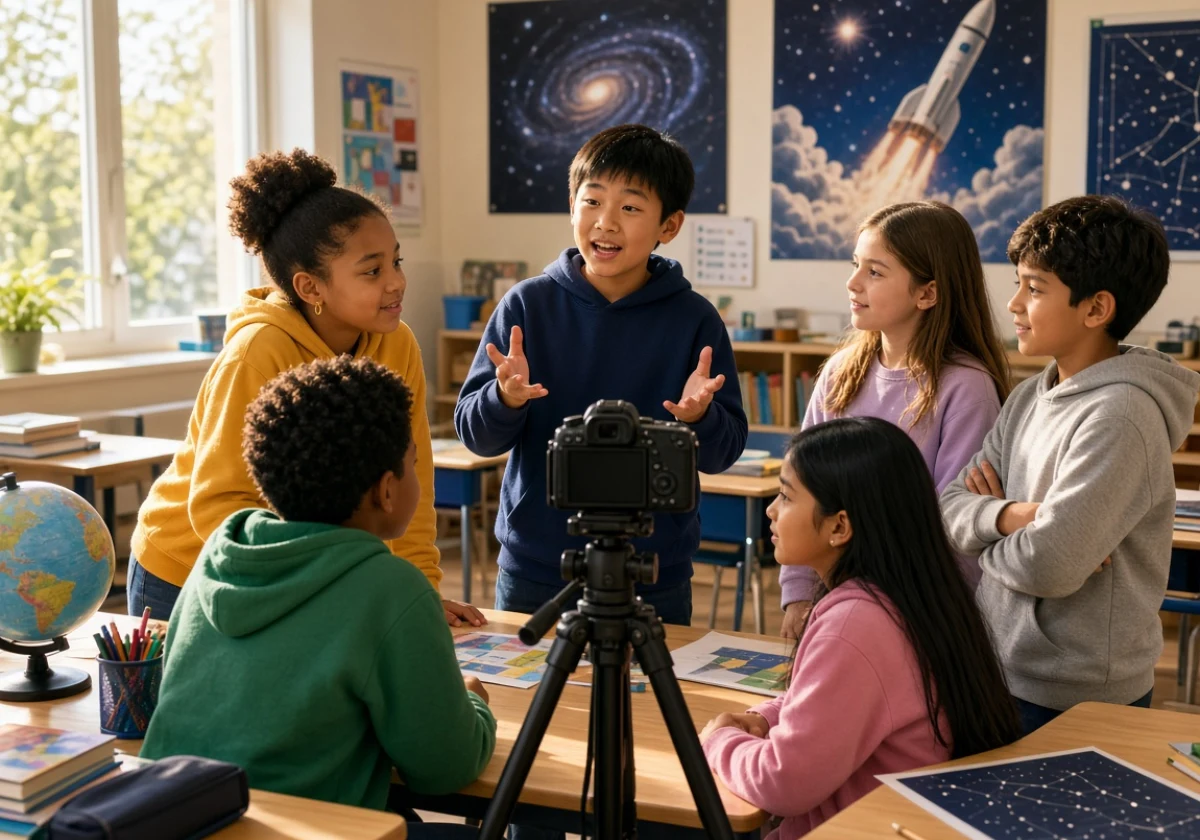
- Design Challenges: Running the Spotlite Design Challenge asks students to research a topic, write scripts, and produce short videos. Explaining a concept on camera exposes gaps in student understanding that a quiz never finds.
- Astronomy Simulation Software: Free sky programs replay a year of planetary motion in about a minute. These interactive simulations mean clouds stop being a reason to drop the lesson, and a few strung together make a rough astronomy education simulation curriculum.
- Astronomy Experiments: Simple astronomy experiments run on chalk and a sunny window, like timing how a shadow moves across a day. Marking the shadow’s tip on the floor every hour gives students their own measurements of its length and direction. And the result either matches their prediction or it doesn’t.
Quick Tip: Start with one of the activities rather than a whole unit. Astronomy educators who run a single hands-on lesson often come back for the next one, and lesson plans get faster each time.
Bringing Space Science Into Middle School and High School Classrooms
Beyond the resource list, the room itself is where real students put free lessons to the test. Watching students connect physics lessons to the real sky is the best part of teaching space science. This way, gravity stops being a formula the moment a class uses it to predict an eclipse.
That connection depends on students taking a physics course at all, as many of them never do. Although physics is available to most high school students, only about two in five students take it, according to high school physics enrollment data.
Middle school is where you can widen the number of students who take physics early. And the educational activities need no lab equipment. Even a sixth-grade unit on orbits teaches scale and evidence (a tape measure and a hallway cover most of it).
If you’ve ever watched a student go silent after seeing Saturn’s rings, you know how quickly astronomy can capture a student’s attention. Still, plenty of teachers worry they lack the background to teach astronomy.
However, the fix is simpler than it sounds. An introductory course or a few short online classes fill the gaps, while university education outreach programs go further.
Researchers in astronomy education have already mapped the misconceptions students carry about seasons and moon phases. So you can plan around them.
Now that we’ve covered classroom strategies, let’s see how solar system study compares with other STEM education paths.
STEM Education Grows When Students Study the Solar System
Each STEM (science, technology, engineering, and mathematics) subject builds different skills, and studying the solar system trains several of those skills at once. If your class has a window, a notebook, and a clear evening, it already has most of what it needs(no telescope required for most of the first year).
The table below puts three common STEM entry points for students side by side.
| Entry Point | What Students Practice | What It Costs |
|---|---|---|
| Solar system study | Observation, scale, and evidence | Almost nothing |
| Robotics | Design cycles and debugging | A kit per team |
| Lab chemistry | Measurement and controlled tests | A stocked lab |
Honestly, cost is where astronomy wins, since almost every school can run it without buying anything. For students across the world, that low barrier often gives them their first chance to see the universe for themselves.
Bottom Line: One clear night can inspire and engage a room that tunes out during a lecture, which keeps teaching and learning tied to the sky rather than to a budget.
Start Exploring the Stars With Your Students
Astronomy education gives students changing Moon phases and planetary movements to observe, along with questions about why those changes happen. And the reasoning they build there follows them into every science class after.
Pick one night, one target, and one question your class can test. The moon alone is enough to start, and the sky does the rest of the teaching.
Star Hawks Blog shares practical astronomy guidance for teachers who want students observing before they memorize. Browse our posts to plan your first night under the sky and give your class something real to record.